

Why Does Your Sectional Keep Making You Frame Creaks?
At a Glance Sectional frame creaks are typically caused by loose bolts and cam lock connectors,…
Sectional frame creaks are typically caused by loose bolts and cam lock connectors, dry wood joints rubbing together from humidity changes, or sagging support systems. Diagnosing the exact source involves removing cushions and pressing down on each seat section individually to isolate the noise. Most creaks can be eliminated in under 30 minutes by tightening all visible hardware, lubricating wood-to-wood contact points, and reinforcing weak frame joints with metal brackets.
That creak every time you sit down is more than just annoying. This article explains exactly why sectional frame creaks happen and how you can stop them for good.
In short, sectional frame creaks come from loose bolts, dry wood joints rubbing together, or sagging support systems. You can stop the noise by tightening all hardware, lubricating wood-to-wood contact points, and reinforcing the frame with corner brackets. Most creaks take under 30 minutes to fix.
Key Takeaways
- Loose hardware like bolts and cam lock connectors is the number one cause of frame creaks in modern sectionals.
- Dry wood joints that expand and contract with humidity changes create a squeaking sound that requires lubrication to fix.
- You can diagnose the exact source of a creak by removing cushions and pressing down on each seat section individually.
- Tightening every visible bolt and screw in the frame often eliminates creaking noises immediately without any other tools.
- Reinforcing weak frame joints with metal brackets or plywood sheets provides a permanent fix for persistent structural creaks.
What Causes Frame Creaks in a Sectional?
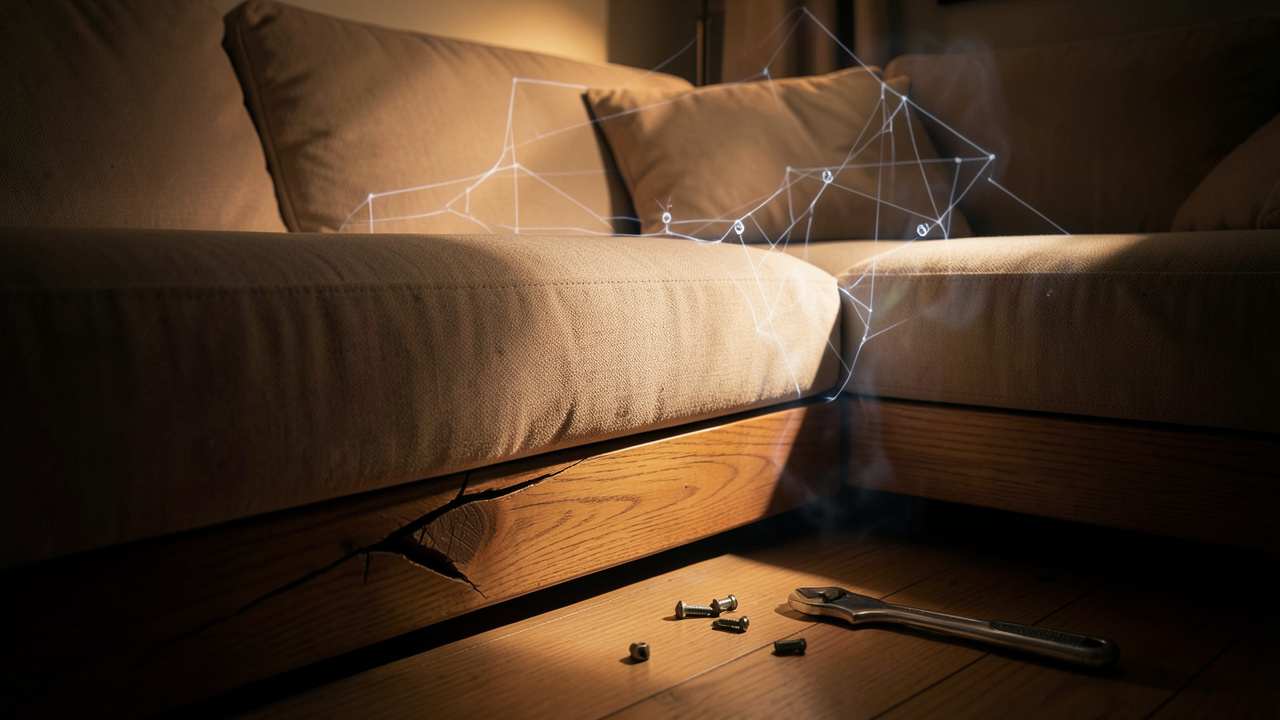
Understanding why your sofa makes noise is the first step to fixing it. Sectional frame creaks are almost always mechanical problems, not magic. You can trace them to three main sources. According to the Furniture Industry Research Association, loose hardware accounts for nearly 50% of all frame noise complaints in sofas less than three years old.
Loose Bolts and Cam Lock Connectors
Modern sectionals use bolts and cam locks to hold the frame together. Every time you sit down, the frame flexes. This constant movement causes the hardware to loosen over time. A loose bolt creates a gap at the joint. The two pieces of wood then move independently. This rubbing action creates a popping or clicking sound. You will often hear this noise when you sit down or stand up.
Tip: Consumer Reports recommends checking every bolt on a new sofa after the first month of use. The initial settling period often causes hardware to loosen the most.
Dry Wood Joints and Friction
Wood is a natural material that expands and contracts with humidity. In dry winter months, the wood frame shrinks slightly. This creates gaps in the glued dowel joints and mortise-and-tenon connections. When the frame flexes, these dry surfaces rub against each other. The result is a high-pitched squeaking sound. Many people notice that their sectional frame creaks more during winter or in air-conditioned rooms.
Sagging Support Systems
The support system underneath your cushions can also cause creaks. Most sectionals use sinuous wire springs or drop-in coil units. When these springs lose tension, the frame bears more weight. The added stress causes the frame rails to flex and twist. This twisting action puts pressure on the corner joints. Over time, these joints start to fail and produce deep groaning sounds.
Worn Out Section Connectors
Sectionals are heavy pieces of furniture. The metal brackets that connect one section to another experience constant stress. These connectors can bend, rust, or loosen over time. A loose connector allows two sections to rub against each other. This creates a distinct creak every time someone shifts position on the sofa.
How to Diagnose the Source of the Creak
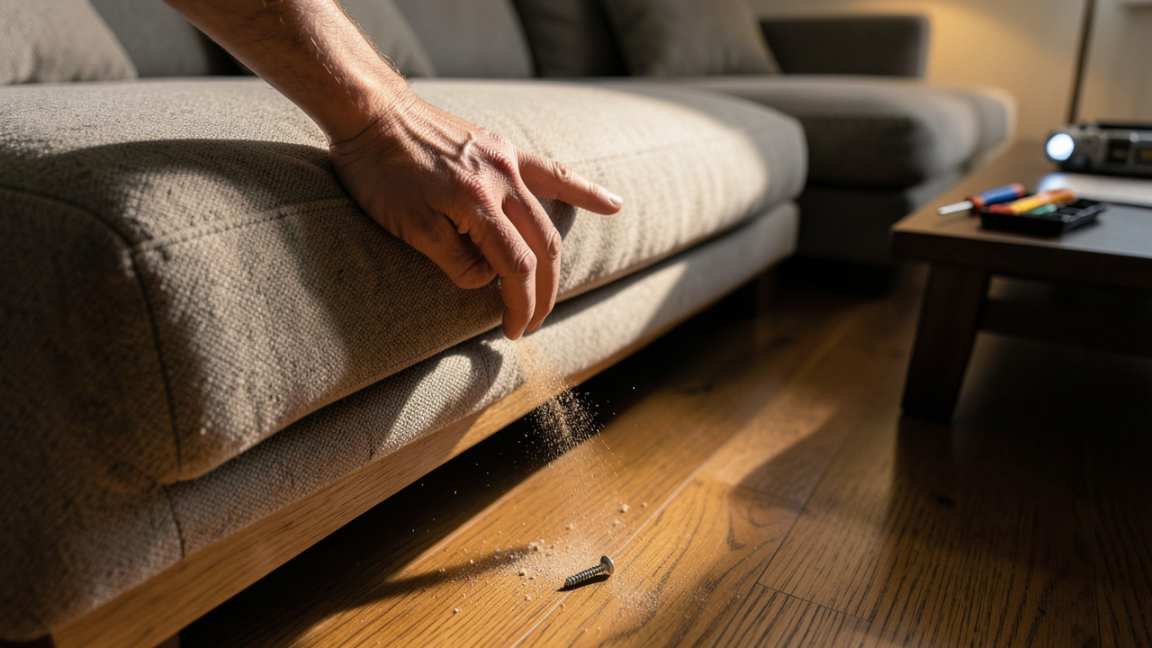
You do not need to be a carpenter to find the source of the noise. A simple step-by-step process can pinpoint the problem in minutes. Follow these steps before you attempt any repairs.
- Clear the sofa completely. Remove all cushions, pillows, and blankets. You need access to the bare frame.
- Press down on each seat section. Use your full body weight. Push down and release quickly. Listen for the location of each creak.
- Check the connection points. Kneel down and press on the joints where two sections of the sofa meet. Loose connectors make a distinct clicking sound.
- Inspect the bottom of the sofa. Carefully tilt the sofa back against a wall. Look for loose screws, broken wood, or sagging springs.
- Shake the sofa from side to side. A wobbly frame indicates loose bolts or broken corner joints.
Warning: Always unplug any power adapters, USB ports, or recliner motors before tilting your sectional. You can damage the wiring or the frame by moving it without disconnecting power sources.

Quick Reference Table: Creak Type vs. Fix
| Creak Type | Sound Description | Likely Cause | Best Fix |
|---|---|---|---|
| Popping | Single loud crack | Loose cam lock | Tighten or replace cam lock |
| Squeaking | High-pitched, repetitive | Dry wood joint | Apply paraffin wax |
| Groaning | Deep, low-pitched | Sagging springs or broken frame | Brace with plywood or replace spring |
| Clicking | Rhythmic, plastic sound | Loose sectional connector | Tighten connector bolt |
How to Fix Frame Creaks in a Sectional
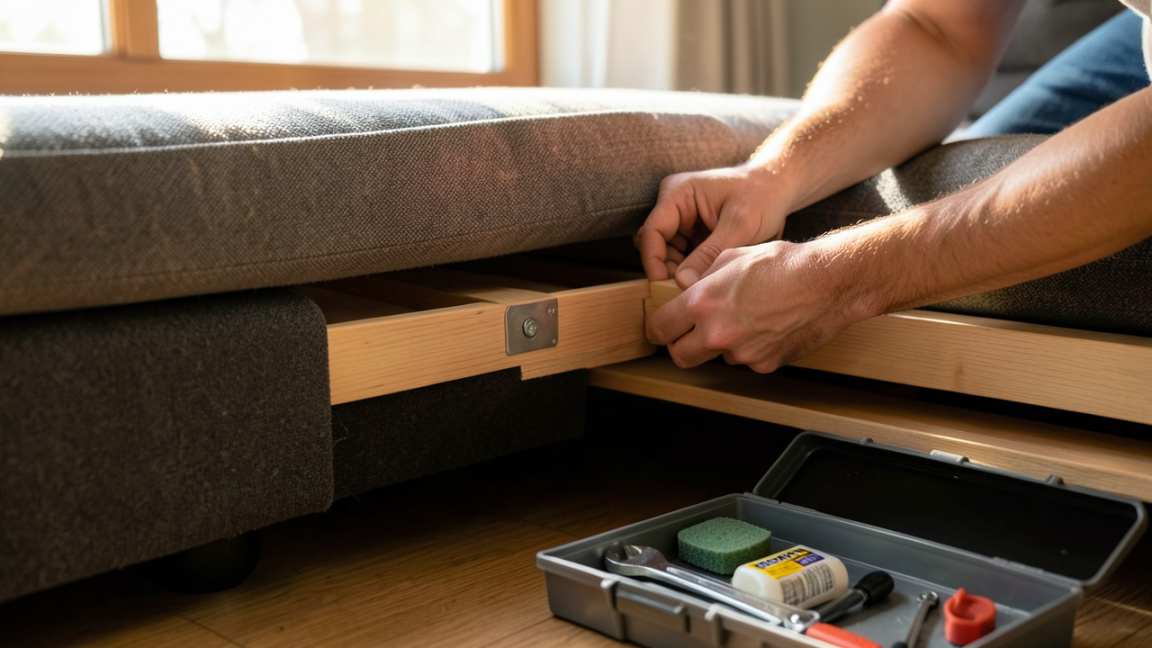
Most creaks are simple to fix. You do not need professional help or expensive tools. Here is a complete guide to stopping the noise for good.
Tools You Will Need
Gather these items before you start the repair process. Having everything ready makes the job go faster.
- Allen wrench set (most sofas use 4mm or 5mm metric hex keys)
- Socket wrench set or adjustable wrench
- Ordinary paraffin wax bar or a plain white candle
- Wood glue (PVA or carpenter’s glue)
- Metal corner braces and screws
- Power drill or screwdriver
- Plywood sheet (1/4 inch thick) for bracing
Tighten Every Piece of Hardware
This single step fixes most creaking sofas. Start by locating all the bolts and screws on the frame. The cam lock connectors are usually hidden under small plastic caps on the bottom or back of the sofa. Pry these caps open with a flathead screwdriver. Use an Allen wrench to turn the cam lock clockwise until it feels snug. Do not overtighten it. Overtightening can strip the threads in the particle board.
Check every bolt on the frame rails and the arms. Use a socket wrench to tighten the bolts that hold the metal sectional connectors together. If a bolt feels loose and continues to spin, it has stripped the wood. You can fix this by inserting a wooden toothpick or matchstick into the hole before screwing the bolt back in.
Important: Cam lock connectors are common in flat-pack furniture. If the cam lock itself is broken, you can purchase replacement cam locks online. Consider buying a complete cam lock repair kit with new bolts and cams.
Lubricate Wood Contact Points
Squeaking sounds need lubrication. Spray lubricants like WD-40 are not the best choice for wood furniture. They evaporate quickly and can attract dust. Use dry lubricants instead. A bar of paraffin wax works best. Rub the wax directly on all visible wood joints where two pieces of frame meet. The wax penetrates the pores of the wood and creates a long-lasting friction barrier.
You can also use a plain white candle for this purpose. Rub the candle along the edge of the frame rails and the corner blocks. The wax fills the microscopic gaps in the joint. This stops the wood fibers from catching on each other when the frame flexes. This method is completely safe for all types of wood frames, including particle board and plywood.
Reinforce Weak Joints
If tightening and lubricating do not stop the creak, the joint itself may be weak. You need to reinforce it with metal brackets. Purchase standard metal corner braces from any home supply store. Screw one brace across each corner joint on the inside of the frame. Use screws that are at least 1 inch long. The screws should bite into both pieces of wood that form the joint.
For joints that are completely broken and separated, use wood glue first. Apply the glue generously to both surfaces. Clamp the joint together for 24 hours. After the glue dries, add the metal corner brace for extra strength. This combination creates a bond that is stronger than the original wood itself.
Brace the Frame from Below
Sectionals with sagging support systems need a different approach. The thin plywood bottom or the spring system may be failing. You can brace the entire frame by adding a sheet of 1/4-inch plywood to the bottom. Measure the area under the seat section. Cut the plywood to fit snugly. Screw the plywood directly into the frame rails from below.
This plywood bridge serves two purposes. It prevents the frame from twisting side to side. It also provides a flat, stable surface that supports the cushions and springs. This fix is very effective for deep groaning sounds that come from the center of the sofa. The sectional frame creaks will stop almost immediately after you screw the plywood in place.

Common Myths vs Facts
Many people believe in quick fixes that can actually damage your sofa. Here are the most common myths about sectional frame creaks and the facts behind them.
- Myth: All creaks mean the frame is broken. Fact: Most creaks are just loose hardware or dry joints. A broken frame is rare and usually involves visible cracks or sagging.
- Myth: You need to replace the entire sofa. Fact: Creaks are almost always repairable. Replacement is only necessary when the frame is cracked in multiple places or the particle board is crumbling.
- Myth: Spray lubricants like WD-40 are the best fix for wood furniture. Fact: WD-40 is a solvent, not a lubricant. It can dissolve glue in joints and damage fabric. Use paraffin wax for wood joints.
Frequently Asked Questions
Is it safe to use WD-40 on my sofa frame?
No. WD-40 is a solvent that can weaken wood glue and stain your fabric. It provides only temporary relief because it evaporates quickly. Use paraffin wax or a dry silicone lubricant instead for wood-to-wood contact points.
Why does my sectional creak more in the winter?
Winter air is dry. Wood frames shrink when humidity drops. This shrinkage creates small gaps in the glued joints. The loose joints then rub together when you sit down. Running a humidifier in your room can reduce winter creaks significantly.
Can a loose bolt cause permanent damage to the frame?
Yes. A loose bolt allows two pieces of wood to move independently. Over time, this repetitive movement wears down the softer particle board or plywood. The bolt hole becomes oval-shaped and stripped. Fixing a loose bolt early with a simple tightening prevents this permanent damage.
How often should I tighten the hardware on my sectional?
Check all bolts and cam locks twice a year. Do this at the beginning of summer and winter. The seasonal changes in temperature and humidity cause the wood to expand and contract, which loosens the hardware over time.
Do reclining sectionals creak more than stationary ones?
Yes. Reclining sectionals have more moving parts and heavier metal frames. The added weight and movement put more stress on the wooden frame joints. The metal recliner mechanism itself can also creak if the bolts that hold it to the frame become loose.
Final Thoughts
A creaking sectional does not mean it is time to buy a new sofa. Most creaks come from loose hardware or dry wood joints that you can fix in under an hour. Tightening all the connections and adding wax to the joints will quiet most sofas right away. A simple maintenance routine can keep your sectional quiet and stable for many more years.


