

Is a Swivel or Stationary Better for a Bedroom Corner?
At a Glance A swivel mount is better for a bedroom corner if you need to…
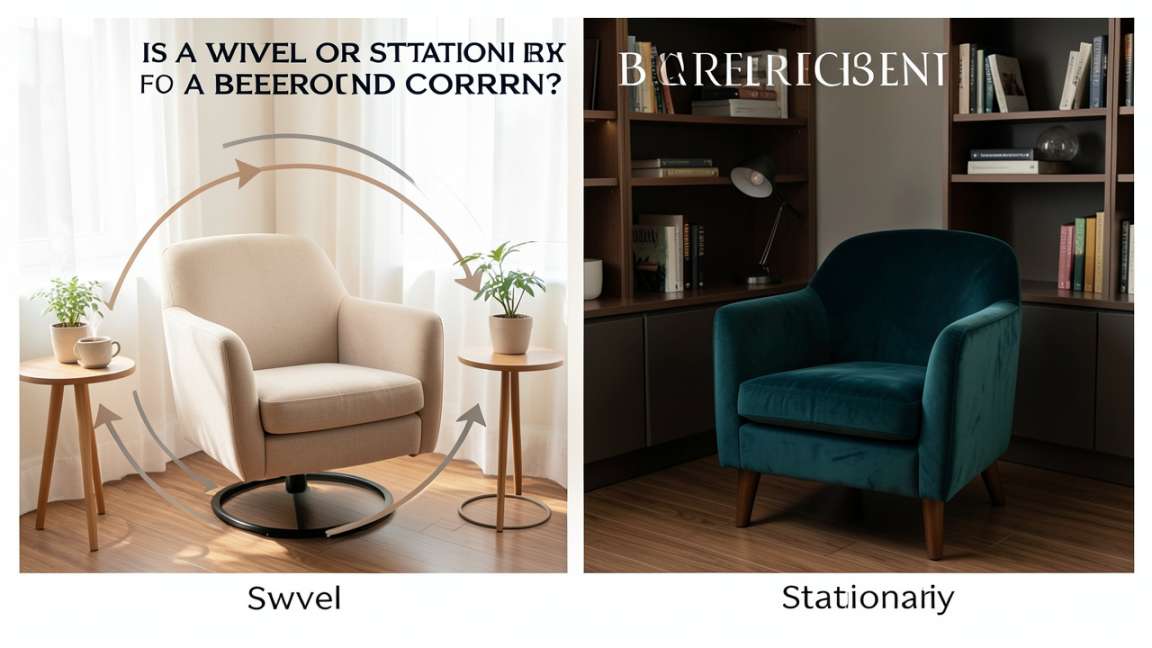
A swivel mount is better for a bedroom corner if you need to watch TV from the bed and other seating areas, while a stationary mount works best when viewing is always from a single fixed position directly across the corner. Swivel mounts provide high viewing flexibility by allowing the TV to be pulled away and rotated, though they cost 50% to 100% more and require extra installation space for the arm. Stationary mounts keep the TV flush against the wall for a cleaner look and are easier to install, making them the safer choice for placement above a dresser or fireplace.
Choosing the right mount for your bedroom corner TV setup can be tricky. You need to know which option gives you the best viewing angles and saves space.
Simply put, a swivel mount is better for a bedroom corner if you need to watch TV from the bed and other spots like a desk or chair. A stationary mount is better if you always watch from a single fixed position directly across from the corner.
Key Takeaways
- Swivel mounts allow you to pull the TV away from the wall and rotate it toward different seating areas in your bedroom.
- Stationary mounts keep the TV flush against the wall, which creates a cleaner and more built-in look for the room.
- Swivel mounts typically cost 50% to 100% more than stationary mounts and require more installation space for the arm to extend.
- Stationary mounts are easier to install and are often the safer choice for mounting a TV above a corner dresser or fireplace.
- For most bedroom corner setups, a swivel mount provides the best viewing experience when the bed is positioned at an angle.
Quick Comparison Table
| Feature | Swivel Mount | Stationary Mount |
|---|---|---|
| Viewing Flexibility | High – pull, tilt, and rotate | None – fixed position |
| Average Cost | $50 – $200 | $15 – $60 |
| Profile Depth | 2 – 6 inches from wall | 0.5 – 1.5 inches (ultra slim) |
| Installation Difficulty | Medium to Hard | Easy |
| Best Corner Use Case | Multi-angle viewing (bed + desk) | Direct facing bed or chair |
What Is a Swivel Mount?
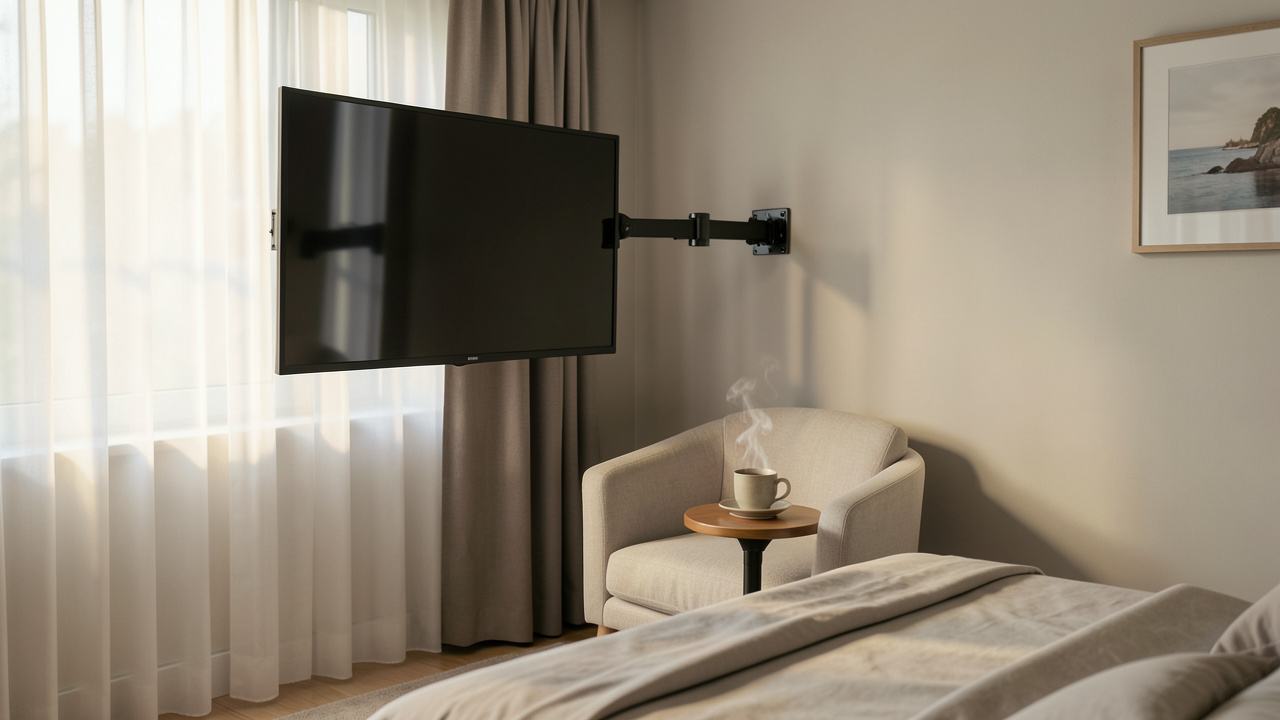
A swivel mount is also called a full-motion mount. It uses an articulated arm that allows you to pull the TV away from the wall. You can then rotate it left or right to change the viewing angle.
These mounts are popular for bedroom corner installations. They give you the ability to watch TV from the bed, a nearby desk, or even while lying on the floor.
How a Swivel Mount Works in a Corner
In a corner setup, a swivel mount attaches to one wall. The arm extends outwards into the room. This lets you position the TV directly in front of your seating area, even if that area is not facing the corner directly.
Important: You need enough space for the arm to fully extend. Measure the distance from the wall to your bed or chair before buying a swivel mount. The arm length must be long enough to reach your desired viewing position.
Pros and Cons of a Swivel Mount
Pros
- You can adjust the screen angle at any time without moving the TV stand or furniture.
- Access to cables and ports behind the TV becomes much easier when you pull the screen forward.
- Reduces glare from windows that are located on the adjacent wall.
- Works well for rooms where the bed is in a corner or angled away from the main wall.
Cons
- Swivel mounts cost more than stationary mounts.
- The TV sticks out from the wall even when pushed back flat against it.
- Installation requires locating strong studs because these mounts carry more leverage.
- Some people find the arm unsightly from certain angles.
What Is a Stationary Mount?
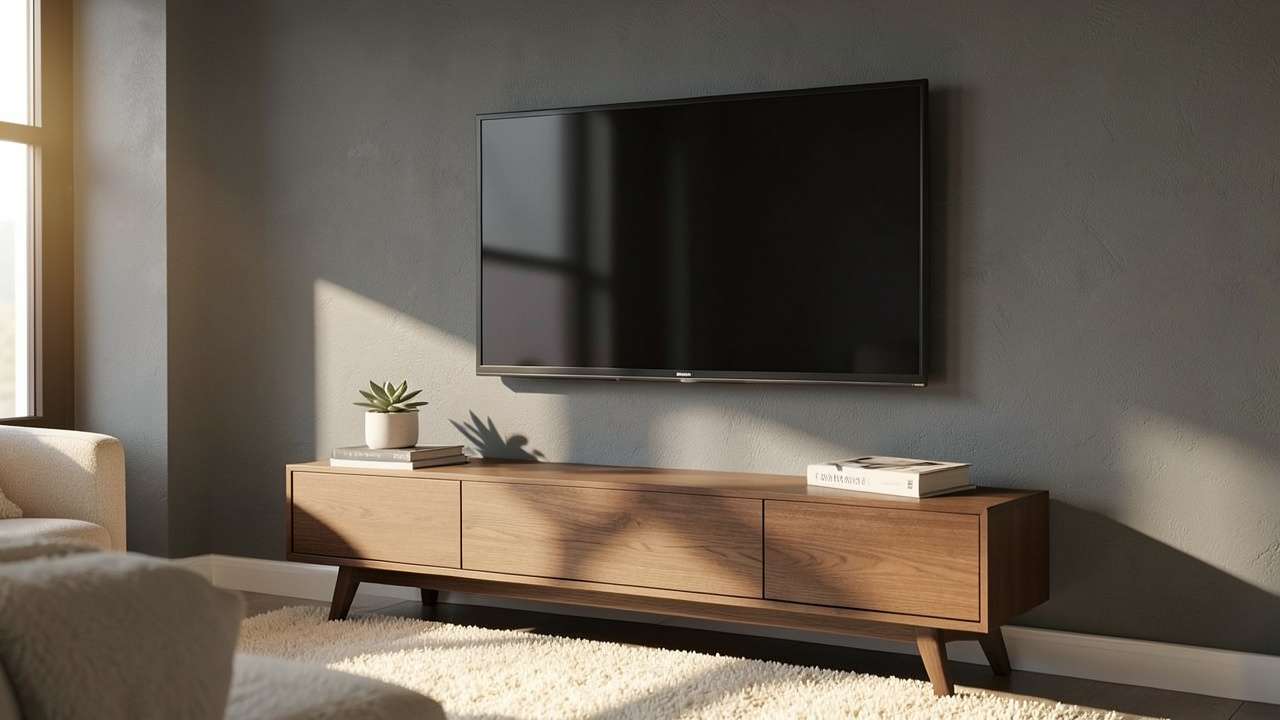
A stationary mount is also known as a fixed or low-profile mount. It holds the TV flat against the wall. Once you install it, you cannot easily change the angle of the screen.
Stationary mounts are the most common mount style in bedrooms. They offer a clean, minimalist look that blends into the wall.
How a Stationary Mount Works in a Corner
In a corner, a stationary mount works best when you place the bed or seating directly opposite the corner. You aim the TV straight ahead. The mount keeps the screen flush against the wall, which saves valuable floor space in small rooms.
Tip: Use a stationary mount if your TV sits above a corner desk or dresser. The low profile leaves more headroom and makes the setup feel less bulky.
Pros and Cons of a Stationary Mount
Pros
- Stationary mounts are affordable. You can find high-quality models for under $30.
- The TV sits extremely close to the wall. This creates a sleek, modern appearance.
- Installation is fast and simple. Most models require only a few bolts and a level.
- These mounts are very secure. There are fewer moving parts that can loosen over time.
Cons
- You cannot adjust the viewing angle after installation.
- Accessing the back ports of your TV is difficult. You may need to unmount the TV entirely.
- Glare from windows can be a problem if you cannot tilt or rotate the screen.
- The mount does not work well if the bed is at a sharp angle to the corner wall.
Head-to-Head Comparison
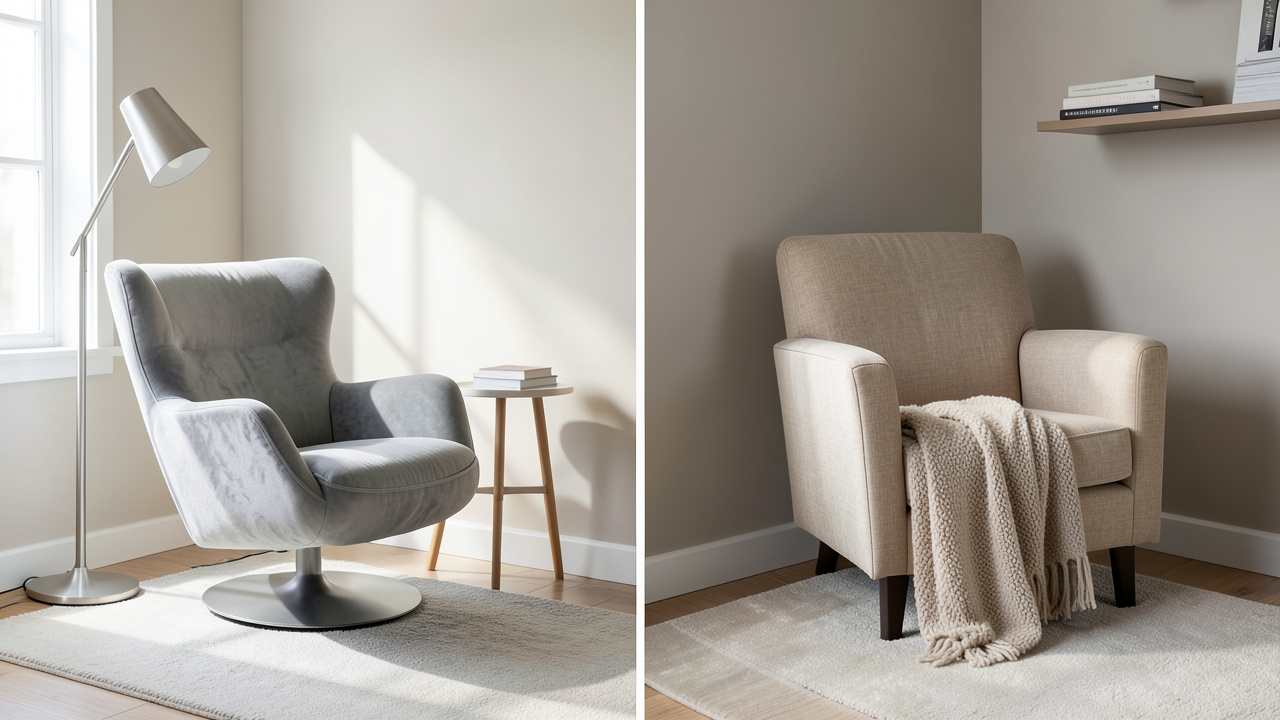
Now that you understand the basics, let us compare these two mount types across the most important factors for your bedroom corner.
Viewing Flexibility
Swivel mounts win in this category. You can move the screen in multiple directions. According to Sanus full-motion mounts, their premium models offer up to 60 degrees of rotation. This flexibility is useful when you want to watch TV from the bed and then turn it toward a desk or chair.
Stationary mounts offer zero flexibility. You get one angle. If you do not like that angle, you must move the furniture or remount the TV.
Cost
Stationary mounts are much cheaper. You can find reliable stationary mounts for $15 to $40. Swivel mounts usually cost $60 to $200 depending on the arm length and weight capacity.
Consider your budget carefully. Industry data suggests that swivel mounts cost 50% to 100% more than standard fixed mounts. Spending extra on a swivel mount makes sense only if you need the flexibility.
Aesthetics and Space
Stationary mounts look cleaner. The TV appears to float on the wall. For small bedrooms, the slim profile makes the room feel larger.
Swivel mounts stick out further. Even when you push the TV back, the arm still creates a gap between the screen and the wall. Some people do not mind this look. Others prefer the flush appearance of a stationary mount.
Installation and Safety
Stationary mounts are easier to install. They are lightweight and require fewer bolts. You can often complete the job in 20 minutes with a drill and a level.
Swivel mounts are heavier and need more support. You must attach them to strong wall studs. For corner installations, you may only have one stud available on the side wall. According to industry installation standards, you should use toggle bolts or a mounting plate to distribute the weight if you cannot hit two studs.
Warning: Do not install a heavy swivel mount into drywall anchors alone. The leverage created by extending the arm can pull the anchors out of the wall. Always screw into wooden studs or use a heavy-duty mounting bracket.
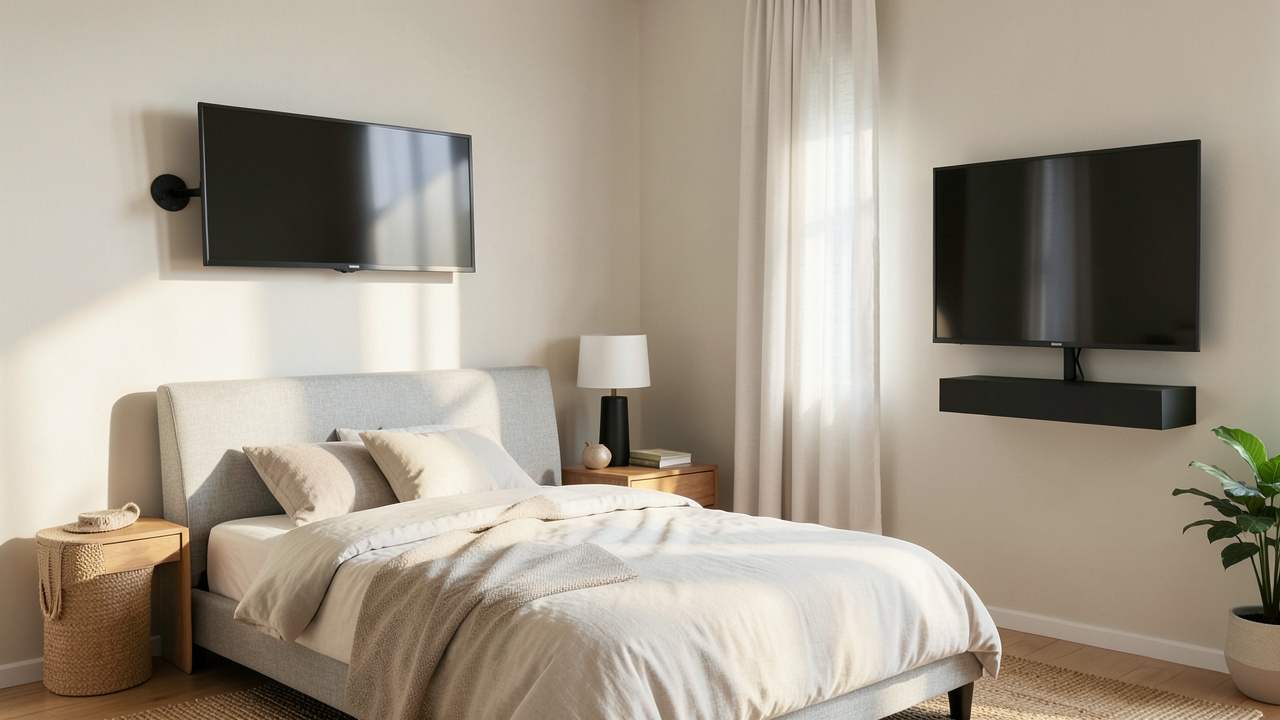
How to Choose the Right Mount for Your Corner
Follow these steps to decide which mount type fits your needs.
- Check your viewing position. Do you watch TV only from the bed? Choose a stationary mount. Do you watch from the bed and a desk? Choose a swivel mount.
- Measure your corner space. Measure the distance from the corner wall to where you sit. A swivel mount needs enough room for the arm to extend. For example, if your bed is 3 feet from the wall, you need an arm that extends at least 18 inches.
- Check your wall type. Find the studs in your corner. Most corner walls have studs every 16 inches. If you cannot find two studs for a swivel mount, consider a stationary mount or a wide plate adapter.
- Consider your TV size and weight. Swivel mounts have lower weight limits than stationary mounts. Always check that the mount can support your TV. Most mounts list their limits clearly on the box.
- Factor in cable management. Swivel mounts make cable access easy. Stationary mounts may require you to cut holes in the wall for hidden cables.

Common Myths vs Facts
Myth 1: A swivel mount is always the better option for a corner.
Fact: Swivel mounts are not always necessary. If you sit directly opposite the corner, a stationary mount gives you the same view. You save money and get a cleaner look.
Myth 2: Stationary mounts cannot be used on corner walls.
Fact: You can install stationary mounts on any wall, including corners. As long as your seating is positioned directly across from the corner, a stationary mount works perfectly.
Myth 3: Swivel mounts stick out too far for small bedrooms.
Fact: Many modern swivel mounts fold flat against the wall when not in use. Models like the Mounting Dream low-profile swivel mount sit only 2 inches from the wall when closed. This gives you the best of both worlds.
Frequently Asked Questions
Can I use a stationary mount in a bedroom corner?
Yes, you can. The stationary mount works best when your bed or chair is placed directly opposite the corner. You will not be able to adjust the angle later. According to interior design experts, this setup works well in small bedrooms where space is limited.
What is the best swivel mount for a bedroom corner?
The best swivel mount has a long arm range and a low closed profile. Look for mounts that offer at least 15 inches of extension and 30 degrees of swivel. Brands like Sanus and Mounting Dream produce reliable corner mounts. Check your VESA pattern to ensure compatibility.
Do swivel mounts stick out too far in a small bedroom?
Not necessarily. Many full-motion mounts now come with a slim design that sits close to the wall when not in use. You can push the TV back to a nearly flat position. This makes them viable for bedrooms of all sizes.
How do I know if my wall can support a swivel mount?
You need to find the wooden studs behind your wall. Use a stud finder to locate them. Swivel mounts require strong support because of the leverage from the arm. If you only have one stud, use a mounting plate that spreads the weight across multiple points.
Is a tilting mount better than a swivel for a corner?
A tilting mount allows you to angle the screen up or down. It does not allow left or right movement. For a corner, a swivel mount is usually better because you need horizontal rotation. A tilting mount is useful if the TV is mounted above eye level, such as over a tall dresser.
Final Thoughts
Choose a swivel mount if you need to watch TV from multiple spots in your bedroom. It gives you flexibility and easy access to cables. Choose a stationary mount if you want a clean, low-profile look and always sit directly facing the corner. Your room layout and viewing habits are the main factors in this decision.


