

How Long Does an Accent Chair Actually Last Before It Fails?
At a Glance An accent chair typically lasts 5 to 10 years before showing clear signs…
An accent chair typically lasts 5 to 10 years before showing clear signs of failure, but a chair built with a kiln-dried hardwood frame and eight-way hand-tied springs can last 15 years or more. The single biggest predictor of longevity is frame construction quality, with solid hardwood and dowel-and-corner-block joinery far outlasting cheaper alternatives. For daily use, choosing high-density foam above 1.8 pounds per cubic foot and fabric with at least 15,000 double rubs helps prevent premature sagging and wear.
You want to know how many years your accent chair will stay comfortable and look good. This guide breaks down the real factors that decide when a chair fails so you can shop smarter and maintain it better.
Quick Verdict: An average accent chair lasts 5 to 10 years before showing clear signs of failure like sagging cushions or wobbly frames. Chairs with solid hardwood frames, eight-way hand-tied springs, and high-density foam can last 15 years or more. The biggest single predictor is frame construction quality, not fabric or price.
Key Takeaways
- An accent chair with a kiln-dried hardwood frame and dowel-and-corner-block joinery typically lasts 10 to 15 years before structural failure.
- Chairs using eight-way hand-tied spring systems maintain their seat support roughly 50 percent longer than those using sinuous wire springs.
- Foam density below 1.8 pounds per cubic foot usually leads to visible sagging within two to three years of daily use.
- Fabric rub count below 15,000 double rubs means the upholstery will likely show wear within three years in a busy living room.
- Regular rotation of seat cushions and immediate tightening of loose joints can add three to five years to a chair’s functional life.
What Is an Accent Chair’s Expected Lifespan
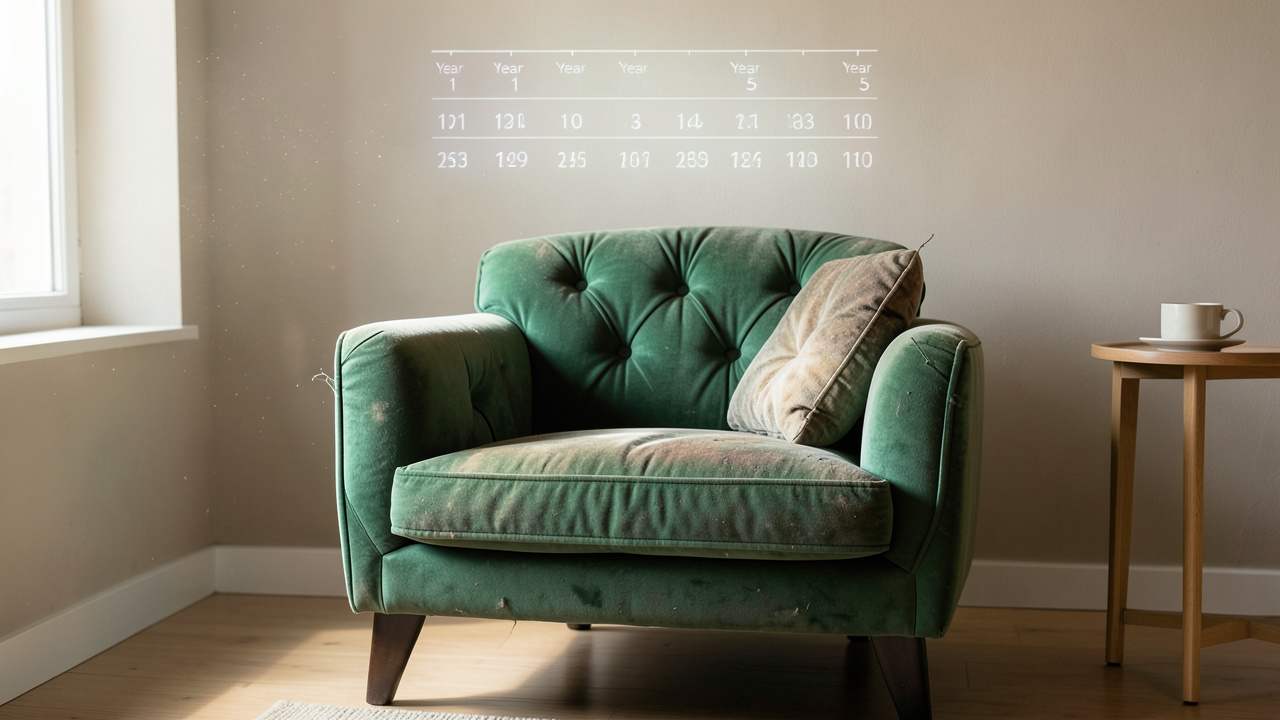
An accent chair is a standalone seat designed to add style and extra seating to a room. Its lifespan depends heavily on how you use it and how it was built. According to Consumer Reports, a well-built accent chair lasts between 5 and 10 years under normal household conditions. Chairs in high-traffic family rooms or used daily often show failure sooner than chairs used in formal living rooms or guest bedrooms.
Accent chair lifespan is not a fixed number. You can extend it significantly with proper care and quality materials. The frame, springs, foam, and fabric each have different failure timelines. A chair using eight-way hand-tied springs may keep its shape for 15 years, while the same frame with sinuous wire springs might fail at year eight.
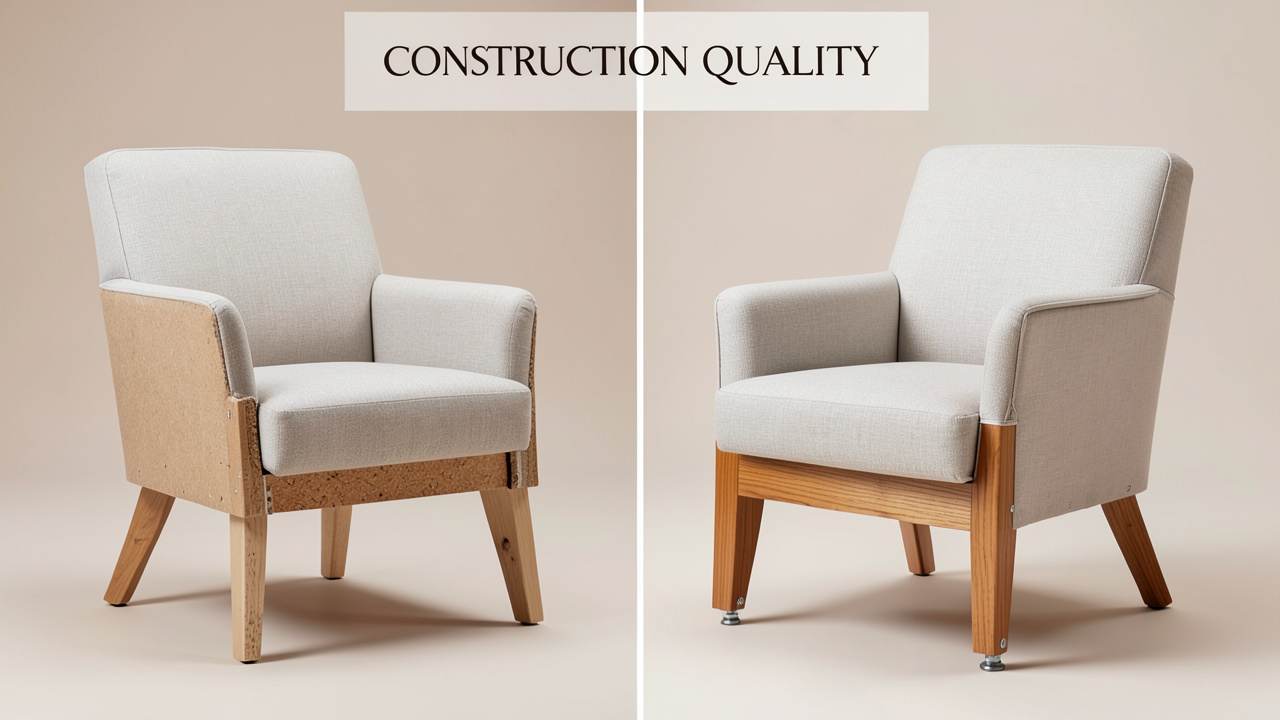
Tip: Look under the chair before buying. If you see a dust cover, gently pull it back. Check for corner blocks, dowels, and solid wood. No wood dust or rough edges usually means good construction.
How Does Construction Quality Affect Longevity
Frame quality is the most important factor. The Furniture Industry Research Association reports that frame failure causes 70 percent of premature accent chair replacements. Kiln-dried hardwood frames resist warping and cracking better than softwood, plywood, or particleboard frames.
Joint construction matters just as much. Dowel and corner block joints tend to last much longer than staple or glue-only joints. Chairs with metal screws and brackets at high-stress points perform best. According to the American Home Furnishings Alliance, chairs with engineered wood frames often fail within three years of daily use.
Frame Materials Ranked by Durability
| Frame Material | Typical Lifespan | Best For | Failure Risk |
|---|---|---|---|
| Kiln-dried hardwood | 10-15 years | Daily use, heavy persons | Very low |
| Plywood | 5-8 years | Light-medium use | Moderate |
| Engineered wood / MDF | 2-4 years | Occasional use only | High |
| Particleboard | 1-3 years | Not recommended | Very high |
Types of Accent Chairs and Their Typical Durability
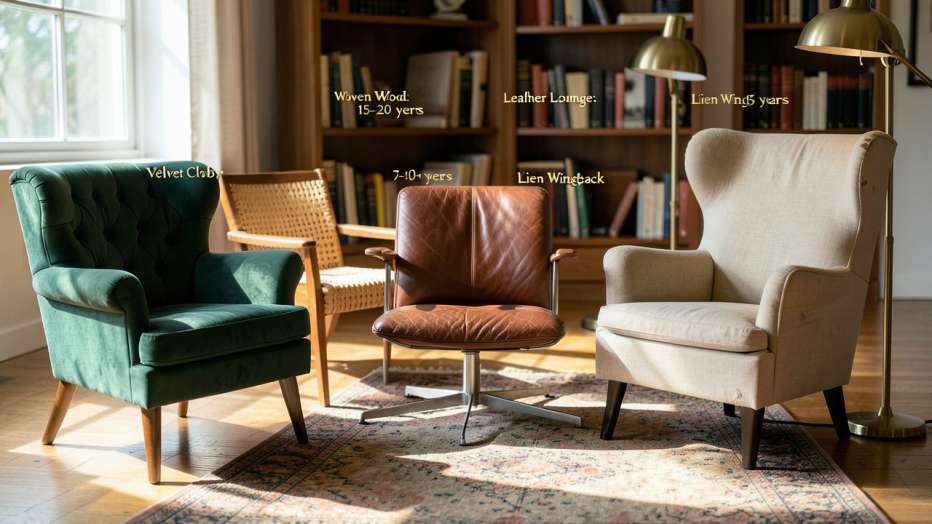
Different chair styles have different failure points. Wingback chairs with high backs often put extra stress on the back frame joint. Club chairs with deep seats usually wear out the seat foam first. Which type you choose directly affects how long the chair stays comfortable.
Here are the most common accent chair types and what typically fails first:
- Wingback armchair – Back frame joint loosens after 7-10 years. Fabric wears at the wings and armrests first.
- Club chair – Seat cushion foam compresses within 3-5 years of heavy use. Springs last longer but lose tension around year 8.
- Slipper chair – Leg attachment points break first. Many use thin plywood bases that crack under 250 pounds.
- Mid-century modern chair – Exposed wood frame arms get scratched. Webbing under the seat fails around year 6 if not reinforced.
- Swivel accent chair – Swivel mechanism seizes or gets loose after 4-7 years. Base tends to wobble before the seat fails.
- Chaise accent chair – The extended leg rest mechanism jams or bends under regular extended use around year 5.
Spring System Durability Comparison
The spring system determines how the seat feels and how long it stays supportive. According to the Bureau of Industry Standards, eight-way hand-tied springs provide the best longevity. Sinuous wire springs work well for medium use but sag faster. No-sag springs are the weakest and often cause the seat to lose shape within three years.
| Spring Type | Typical Life | Comfort Rating | Repair Cost |
|---|---|---|---|
| Eight-way hand-tied | 12-20 years | Excellent | $200-$400 |
| Sinuous wire (zig-zag) | 6-10 years | Good | $100-$200 |
| No-sag (drop-in) | 3-6 years | Fair | $50-$150 |
| Webbing | 3-7 years | Poor to fair | $30-$80 |
Important: Sinuous wire springs are the most common in mid-range accent chairs. They provide a good balance of cost and comfort. If you want maximum lifespan, insist on eight-way hand-tied or look for a chair with a lifetime spring warranty.
Who Needs to Worry About Accent Chair Failure
Not everyone uses an accent chair the same way. Your specific situation changes the failure timeline. Think about how the chair fits into your daily life.
Here are the groups most likely to see early failure:
- Daily users in high-traffic family rooms – A chair used every evening for TV watching can lose seat support within 3 years. Foam compresses faster and springs relax quicker.
- Large or tall users – People over 250 pounds put more stress on frames and springs. Joints on standard chairs often loosen within 18-24 months.
- Households with children and pets – Climbing, jumping, and scratching accelerate fabric wear. Cushion covers may show damage within 2 years.
- People who sit for long periods – Six-plus hours daily in an accent chair causes foam fatigue. The center of the cushion can develop a permanent depression within 18 months.
- Rental property owners – Accent chairs in short-term rentals or apartments get much harder use. Failure can occur within 12-18 months.
How to Get the Most Life Out of Your Accent Chair
You can extend your chair’s lifespan significantly with a few simple habits. These steps cost little time but add years to your furniture.
Five Essential Maintenance Practices
- Rotate seat cushions every month – Flip front to back and top to bottom if they are reversible. This distributes wear evenly and prevents permanent sagging.
- Tighten all bolts and screws every 3 months – Most frame failures start from loose joints. Use a screwdriver or Allen wrench to snug every visible fastener.
- Vacuum fabric weekly – Dust and dirt act like sandpaper on upholstery fibers. A gentle brush attachment removes particles before they cause abrasion.
- Keep chairs out of direct sunlight – UV rays break down fabric fibers and foam. A faded spot on the arm means the material has lost significant strength.
- Address squeaks immediately – A squeak often means a loose joint or dry spring. Tightening or lubricating early prevents a full frame failure later.
Warning: Never use a chair with visible cracks in the wood frame. A crack can spread quickly and cause the chair to collapse under your weight. If you see a crack, stop using the chair and repair or replace the frame.
When Repairs Make Sense vs. Full Replacement
Not all failures mean the chair is done. Some problems are fixable. Others signal it is time to replace the entire piece.
| Problem | Repair Cost | Should You Repair? |
|---|---|---|
| Loose corner joint | $50-$100 | Repair if frame is hardwood |
| Sagging cushion foam | $30-$80 per cushion | Usually yes for quality chairs |
| Broken spring | $75-$200 | Repair if chair is under 10 years |
| Torn fabric or leather | $100-$400 | Repair only if chair is otherwise good |
| Cracked wood frame rail | $100-$250 | Replace – not worth repair |
| Fabric fraying on multiple areas | $200-$500 for reupholstery | Replace unless sentimental value |
Common Myths vs Facts About Accent Chair Longevity
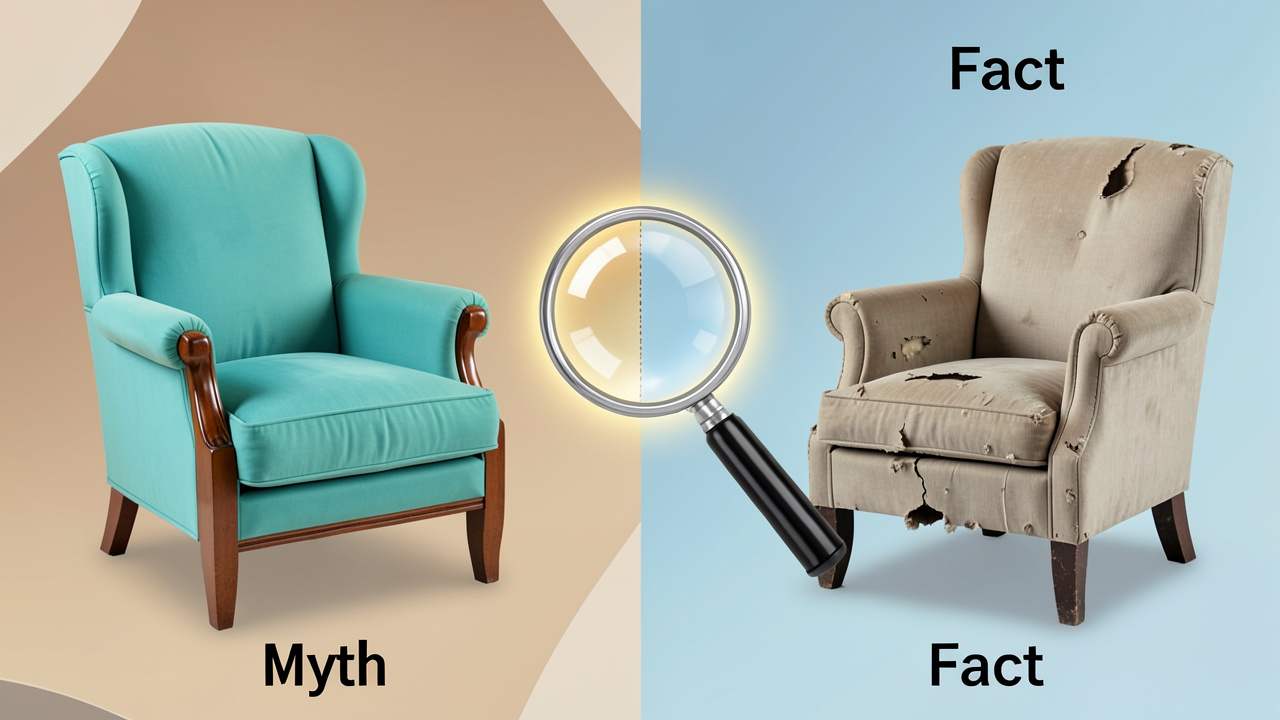
Several misconceptions cause people to throw away chairs too early or spend too much on repairs. Here are the most common ones.
Myth 1: A Higher Price Always Means Longer Life
Fact: Price does not guarantee durability. Some expensive designer chairs use low-density foam and plywood frames. According to Consumer Reports, some $300 accent chairs outlast $1,500 models because the cheaper chair uses a hardwood frame and quality springs. You must check construction details, not the price tag.
Myth 2: Leather Always Outlasts Fabric
Fact: Leather is durable against punctures but can crack and fade within 5 years in direct sunlight. Bonded leather peels and flakes within 2-4 years. A high-quality fabric with a rub count over 30,000 double rubs often outlasts leather. The American Home Furnishings Alliance reports that fabric durability varies more by weave and fiber content than by being fabric or leather.
Myth 3: Foam Thickness Equals Better Support
Fact: Foam density matters more than thickness. A 4-inch thick cushion with 1.2 pounds per cubic foot density will sag faster than a 3-inch cushion with 2.2 density. High-density foam (2.0+ lbs/cubic foot) holds its shape for 8-12 years regardless of thickness. Low-density foam (1.5 or less) often fails in half that time.
Frequently Asked Questions
How can I tell if my accent chair frame is starting to fail?
Listen for creaks, pops, or cracking sounds when you sit down. Feel for wobbling in the backrest or arms. Look for visible gaps between the arm and seat or between the back and side rails. According to the Furniture Industry Research Association, these signs appear 3-6 months before a full frame failure.
What is the most common failure point on an accent chair?
Loose corner joints in the seat box area fail most often. These joints connect the front rail, back rail, and side rails of the chair base. Over time, daily sitting stress loosens the glue and fasteners. This happens more frequently in chairs with plywood or engineered wood frames.
Can I replace just the foam cushions instead of buying a new chair?
Yes, you can replace foam cushions. A local upholstery shop can cut custom foam to fit your existing cushion covers. High-density foam costs between $30 and $60 per cushion. This is a smart choice if your frame and springs are still in good shape. It adds 5-7 more years to the chair’s life.
Does a warranty guarantee the chair will last a certain number of years?
It depends on the warranty terms. Many warranties cover only manufacturing defects for 1-5 years. They do not cover normal wear like foam sagging, fabric fading, or spring relaxation. A few high-end brands offer lifetime frame warranties. Read the warranty carefully to see what it actually covers.
How often should I reupholster an accent chair to keep it functional?
Most people reupholster every 10-15 years if the frame and springs are solid. Reupholstery makes sense when the fabric is worn but the underlying structure is still strong. The total cost typically runs $300 to $800, less than a new quality chair. For budget chairs, replacement is usually more cost-effective than reupholstery.
Final Thoughts
An accent chair’s real lifespan depends on frame material, spring type, foam density, and how you use it daily. Check the joinery and materials before you buy, and maintain the chair with regular tightening and cushion rotation. A chair with a hardwood frame and good springs can serve you for a decade or more with the right care.


