

6 Things to Check Before You Buy a Reading Chair
At a Glance Before buying a reading chair, check six critical features: seat height and depth,…
Before buying a reading chair, check six critical features: seat height and depth, lumbar support, armrest position, recline options, upholstery material, and frame build quality. Proper seat height allows feet flat on floor with knees at 90 degrees, while adjustable lumbar support prevents lower back strain during long sessions. A reclining mechanism reduces spinal pressure, and high-density foam with a hardwood frame ensures durability and lasting comfort.
Do you spend hours lost in books and feel stiff after every session? This guide covers the six key things to check so you buy the right reading chair for long, comfortable reading sessions.
Quick Verdict: A reading chair must support good posture, fit your body size, and match how you actually read. Check seat height, lumbar support, armrest position, recline options, upholstery material, and frame build quality. Ignoring these leads to back pain, poor circulation, and early wear.
Key Takeaways
- Proper seat height lets your feet rest flat while your knees stay at a 90-degree angle.
- Adjustable lumbar support prevents lower back strain during long reading sessions.
- Armrests should let your elbows rest at 90 degrees without forcing your shoulders up.
- A reclining mechanism reduces spinal pressure and lets you shift positions.
- High-density foam and hardwood frames last longer and keep their shape better.

Quick Comparison Table
| Feature | What to Check | Ideal Range | Why It Matters |
|---|---|---|---|
| Seat Height | Floor to top of seat cushion | 16 – 20 inches | Leg comfort and circulation |
| Seat Depth | Front edge to backrest | 20 – 22 inches | Knee and lower back alignment |
| Armrest Height | Seat to top of armrest | 7 – 10 inches | Shoulder and neck strain |
| Backrest Height | Seat to top of back | 22 – 28 inches | Upper back and head support |
| Recline Angle | Degrees of recline | 100 – 135 degrees | Spinal pressure relief |
1 – Seat Height and Depth
Overview
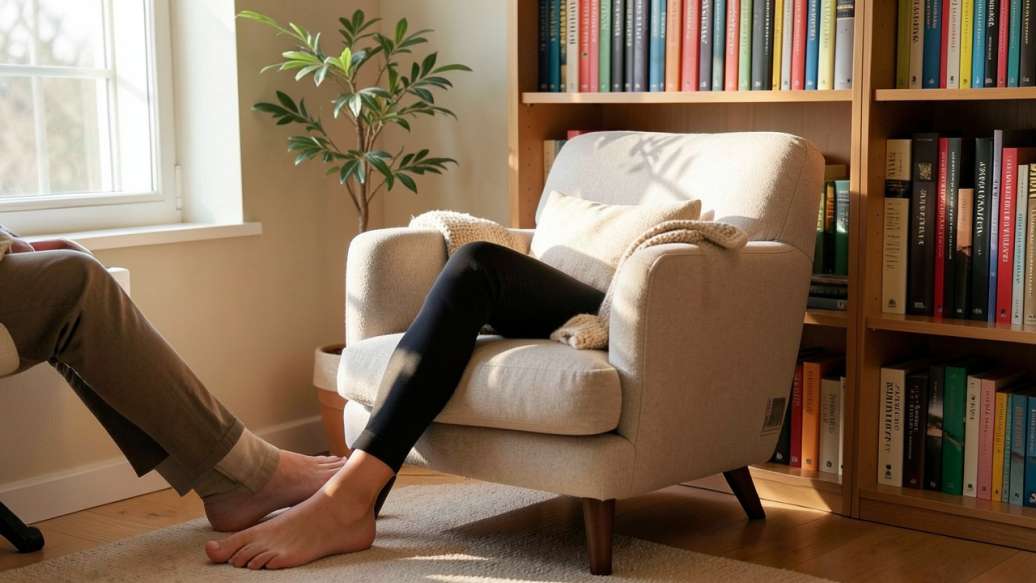
Your reading chair must let your feet rest flat on the floor. If your legs dangle or stretch forward, your back takes the strain. Seat height typically ranges from 16 to 20 inches. Seat depth runs from 20 to 22 inches for most adult sizes.
According to OSHA ergonomic guidelines, proper seat height keeps your knees at a 90-degree angle. Your thighs should be parallel to the ground. If the seat is too deep, the front edge presses behind your knees. This cuts off circulation over time.
Pros and Cons
- Correct seat height – Keeps your feet grounded, reduces lower back pressure, and improves blood flow.
- Wrong seat height – Too high causes thigh pressure and numbness. Too low forces your knees above your hips, straining your lower back.
- Correct seat depth – Lets you sit back against the backrest with 2-3 inches of space behind your knees.
- Wrong seat depth – Too deep forces slouching. Too shallow leaves your thighs unsupported.
Best For
Short to average-height readers (under five foot eight) benefit most from a shallower seat around 20 inches. Taller readers over six feet often need a 22-inch depth and an 18-inch seat height. Always test the chair in person if you can.
Important: Measure the distance from the back of your knee to your heel while sitting. Subtract 2 inches. That number is your ideal seat depth. Most people miss this simple check and end up with a chair that forces them to slouch.
2 – Lumbar Support and Ergonomics
Overview
Good lumbar support keeps your spine in its natural S-curve. Without it, you gradually slump forward. The American Chiropractic Association reports that over 80% of adults experience back pain at some point. A reading chair with built-in lumbar support can help prevent this.
Look for chairs with a pronounced curve in the lower back area. Some models offer adjustable lumbar pads. Others have a tension system that lets you control how much the backrest gives.
Pros and Cons
- Integrated lumbar curve – Works without adjustment, but may not fit every body shape.
- Adjustable lumbar support – Lets you move the support up or down to match your spine. Best for households with multiple readers.
- Removable lumbar pillow – Provides flexibility. You can remove it if you do not need it.
- No lumbar support – Flat backrests cause lower back fatigue. Avoid these for long reading sessions.
Best For
Anyone with existing lower back issues needs adjustable lumbar support. Readers who switch between upright and reclined positions benefit from a chair with a tension-adjustable backrest. People under five foot four may find standard lumbar curves too high and should look for a shorter backrest.
3 – Armrest Design and Height
Overview
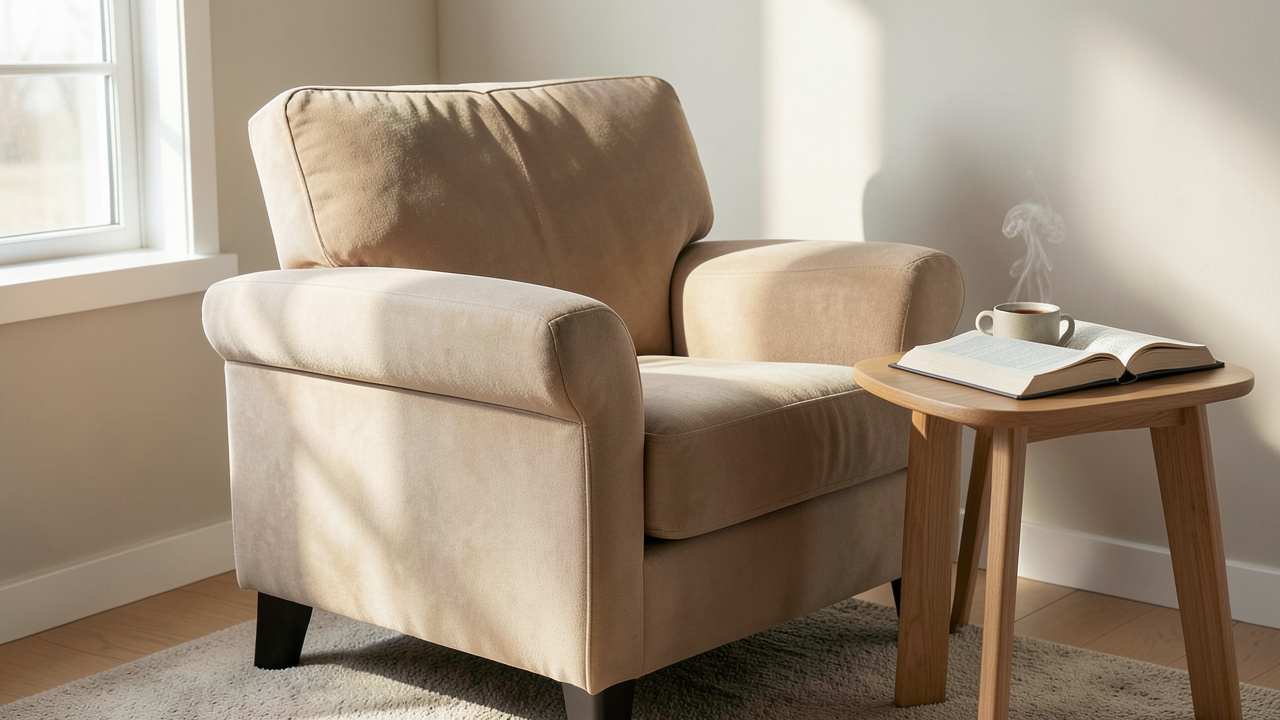
Armrests support your arms while you hold a book or e-reader. If the armrests are too high, your shoulders hunch up. If they are too low, you lean to one side. The correct height lets your elbows rest at 90 degrees with your shoulders relaxed.
A study from NIOSH on seated posture shows that unsupported arms increase muscle load in the shoulders by up to 35%. Armrests on a reading chair should be wide enough to rest your forearm without being so wide that they dig into your sides.
Pros and Cons
- Padded armrests – Provide comfort for longer sessions. Foam padding between 1-2 inches works best.
- Adjustable armrests – Let you change height and sometimes width. Ideal for sharing the chair.
- Fixed armrests – More durable and simpler. You must check the height matches your body.
- No armrests – Forces your arms to rest in your lap. Not recommended for reading longer than 30 minutes.
Best For
Readers who hold heavy books benefit from wider, well-padded armrests. People with broad shoulders need extra space between armrests. Narrow armrests that are less than six inches apart can dig into the hips. Always measure your hip width and add at least two inches.
Warning: Never buy a reading chair with metal or hard plastic armrests if you plan to read for more than one hour. The pressure on your elbows can cause ulnar nerve compression, leading to numbness in your ring and pinky fingers.
4 – Recline and Rocking Options
Overview
Reading for extended periods in one fixed position puts stress on your spine. A reclining mechanism lets you shift your weight and reduce pressure on your lower back. The ideal recline range for reading is between 100 degrees (upright) and 135 degrees (semi-reclined).
Rocking chairs are another option for readers who find gentle motion calming. A 2017 study by the National Institutes of Health found that rocking motion can improve sleep quality and reduce anxiety. This makes a rocking reading chair a solid choice for bedtime readers.
Pros and Cons
- Recliner – Best for reducing spinal pressure. Requires more floor space. Heavier.
- Rocking chair – Gentle motion reduces stress. Not ideal for upright reading. May tip on carpet.
- Swivel chair – Allows easy movement to reach side tables. Less support for napping.
- Stationary chair – Simplest design, most durable, lightest. No movement options.
Best For
Recliners work best for people with chronic back pain who read in short bursts. Rocking chairs suit readers who enjoy bedtime reading or have restless legs. Swivel chairs are ideal for reading nooks where you need to grab items from multiple directions.
5 – Material and Upholstery
Overview
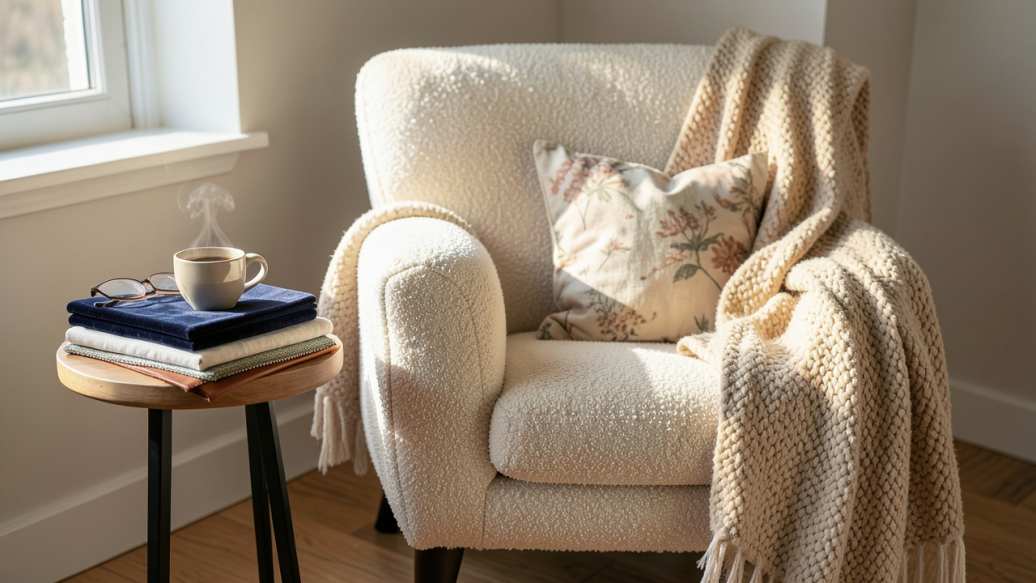
Upholstery affects comfort, breathability, and maintenance. Fabric chairs breathe better than leather, but they stain easier. Leather is easier to clean but can get sticky in warm weather. High-density foam cushions keep their shape longer than low-density foam.
The Federal Trade Commission sets standards for furniture flammability labeling. Most quality reading chair makers use foam that meets Cal TB 117 requirements. This matters for fire safety but also affects how the foam ages.
Types of Materials
- Leather (top-grain) – Durable, easy to clean, ages well. Expensive. Can feel cold in winter.
- Leather (bonded) – Cheaper. Peels after 2-3 years. Not recommended.
- Cotton or linen fabric – Breathable, soft. Stains easily. Needs professional cleaning.
- Microfiber (polyester) – Stain-resistant, soft, affordable. Can pill over time.
- Wool or wool-blend – Warm, durable, natural. More expensive. Requires special cleaning.
- Velvet – Luxurious feel. Shows wear on high-contact areas. High maintenance.
Best For
Households with pets or kids need microfiber or leather. These resist stains and clean up fast. Readers in humid climates should avoid non-breathable materials like bonded leather. Choose a high-density foam with at least 1.8 pounds per cubic foot for cushions that last over five years.
Tip: To test cushion quality, press your palm into the seat. If you feel the base board within one inch of the surface, the foam is too thin. Look for cushions at least four inches thick with a foam density of 2.0 pounds or higher.
6 – Build Quality and Frame
Overview
A well-built reading chair lasts ten years or more. A poorly built one starts sagging within twelve months. The frame material matters most. Hardwood frames (oak, ash, birch) are strongest. Plywood frames are acceptable if they have at least twelve layers. Particle board frames break down quickly.
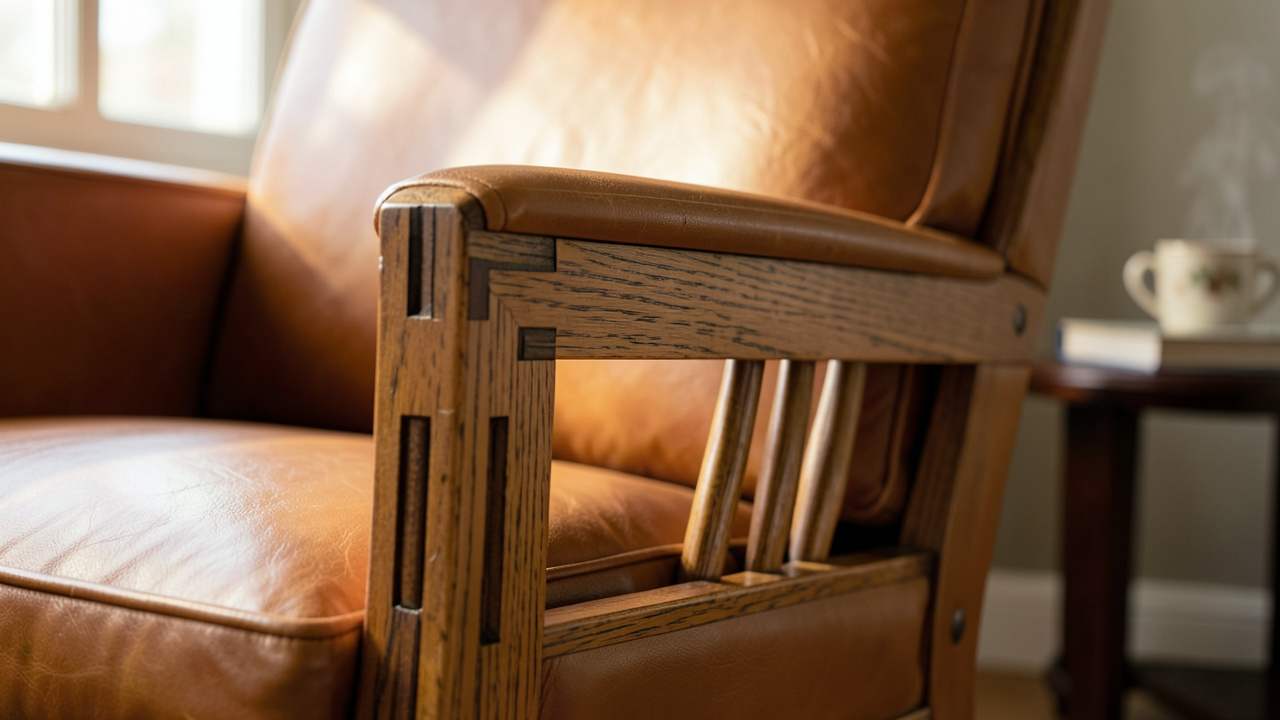
According to Consumer Reports, chairs with kiln-dried hardwood frames and eight-way hand-tied springs last the longest. Look for joinery methods like dowel-and-glue or mortise-and-tenon rather than staples and screws.
What to Check
- Frame material – Kiln-dried hardwood is best. Plywood with 12+ plies is acceptable. Avoid particle board.
- Suspension type – Eight-way hand-tied springs give the best support. Sinuous springs are cheaper but sag faster.
- Joinery – Dowel-and-glue or mortise-and-tenon. Staples mean lower quality.
- Fabric attachment – Look for double-stitched seams with reinforced corners.
- Warranty – A five-year or longer warranty on the frame indicates confidence from the maker.
Best For
If you plan to read daily for years, invest in a chair with a hardwood frame and hand-tied springs. Brands like Stressless by Ekornes and Herman Miller use these construction methods. For a budget, look for a chair with a 12-ply plywood frame and a five-year warranty.
How to Choose the Right Reading Chair
Start by measuring your space. A reading chair needs at least 30 inches of clearance in front for your legs. Measure your own body dimensions – seat height, depth, armrest height, and backrest height. Write down your measurements before you shop.
- Measure your knee height when sitting on a flat surface. Add 2 inches to find your ideal seat height.
- Measure from your lower back to the back of your knee. Subtract 2 inches for your seat depth.
- Test the armrest height by relaxing your shoulders. Your elbows should rest at 90 degrees.
- Choose a backrest that reaches at least your shoulder blades for reading support.
- Pick a recline mechanism that lets you change positions easily while holding a book.
Important: Bring a real book to the store. Sit in the chair for at least 15 minutes. Read from different angles. If you feel any pressure points or discomfort within 15 minutes, it will only get worse over two hours. Trust your body, not the showroom lighting.
Common Myths vs Facts
Myth 1: Any comfortable armchair works for reading
Not true. Many armchairs are designed for occasional sitting, not long reading sessions. A reading chair needs specific ergonomics – proper seat height, lumbar support, and armrest position. A living room armchair may feel soft for 20 minutes but can cause back pain after an hour of reading.
Myth 2: More expensive means better ergonomics
Price does not guarantee good posture. Some budget chairs from IKEA offer better lumbar support than luxury brands. What matters is how the chair fits your specific body dimensions. Always test a chair in person regardless of price.
Myth 3: Recliners are only for napping
Modern recliners offer multiple positions, including an upright lock for active reading. According to the Mayo Clinic, periodic reclining during sitting improves circulation and reduces disc pressure. A good recliner supports both reading and resting.
Frequently Asked Questions
What is the ideal seat height for a reading chair?
The ideal seat height ranges from 16 to 20 inches. Your feet should rest flat on the floor with your knees at a 90-degree angle. Measure from the floor to the back of your knee while sitting to find your personal number.
How do I measure seat depth correctly?
Sit on a flat surface with your back against the wall. Measure from the wall to the back of your knee. Subtract 2 inches. That number is your maximum comfortable seat depth. For a reading chair, 20 to 22 inches works for most adults.
Does a reading chair need a footrest?
A footrest helps if you prefer to recline or if the seat is slightly too high. It reduces pressure behind your knees. Many readers pair an ottoman with their chair for better leg positioning during longer sessions.
What material is best for readers with allergies?
Choose tightly woven fabric or leather to reduce dust accumulation. Leather is hypoallergenic and easy to wipe clean. Look for removable cushion covers that you can wash regularly in hot water to remove allergens.
How often should I replace my reading chair?
A quality reading chair with a hardwood frame lasts 10 to 15 years. Replace it sooner if you notice sagging cushions, visible frame damage, or worsening back pain after sitting. Foam typically wears out every 5 to 7 years even if the frame is still solid.
Final Thoughts
A good reading chair protects your back and makes every session more enjoyable. Focus on seat height, lumbar support, armrest position, recline options, material, and frame quality. Take your time testing chairs in person and always bring a book along. Your body will thank you for choosing a chair built for real reading sessions.


