

8 Warning Signs Your Floating TV Stand Is About to Stop Working
At a Glance The eight warning signs that a floating TV stand is approaching failure include…
The eight warning signs that a floating TV stand is approaching failure include visible cracks and creaking sounds, loss of level, gaps between the wall and stand, stuck or misaligned doors and drawers, and overheating of mounted components. These indicators typically result from gradual wall anchor fatigue, wood sag, or stripped hardware in the MDF or particle board. Upon noticing any structural shift—such as a front-to-back sag or gaps forming at the top—the immediate action is to relieve the weight and inspect the mounting system against wall studs.
A floating TV stand can transform your living room, but hidden stress on the wall anchors makes every passing day a gamble. This guide explains the 8 specific warning signs that tell you your wall-mounted media console is close to complete failure.
Simply put, a floating TV stand fails silently through gradual wall anchor fatigue, wood sag, or stripped hardware. The most common warning signs are a visible front-to-back sag, cracks around screw heads, and doors that stop aligning. If you notice any structural shift, relieve the weight immediately and inspect the mounting system against the wall studs.
Key Takeaways
- Gaps forming between the top of your floating TV stand and the wall is a primary indicator that the structural anchors are pulling out of the wall studs due to sustained shear weight.
- Doors and drawers that stick or fail to align correctly often signal that the cabinet frame has twisted or sagged past its original load tolerance.
- Stripped screw holes in the back panel or side panels of the TV stand mean the MDF or particle board has lost its grip, requiring immediate reinforcement or replacement.
- Electronic components overheating inside an enclosed floating unit can degrade the wood glue and internal structure, accelerating mechanical failure.
- Regularly testing your stand by applying firm horizontal pressure can reveal dangerous wobbling that signals anchor failure before a complete collapse occurs.
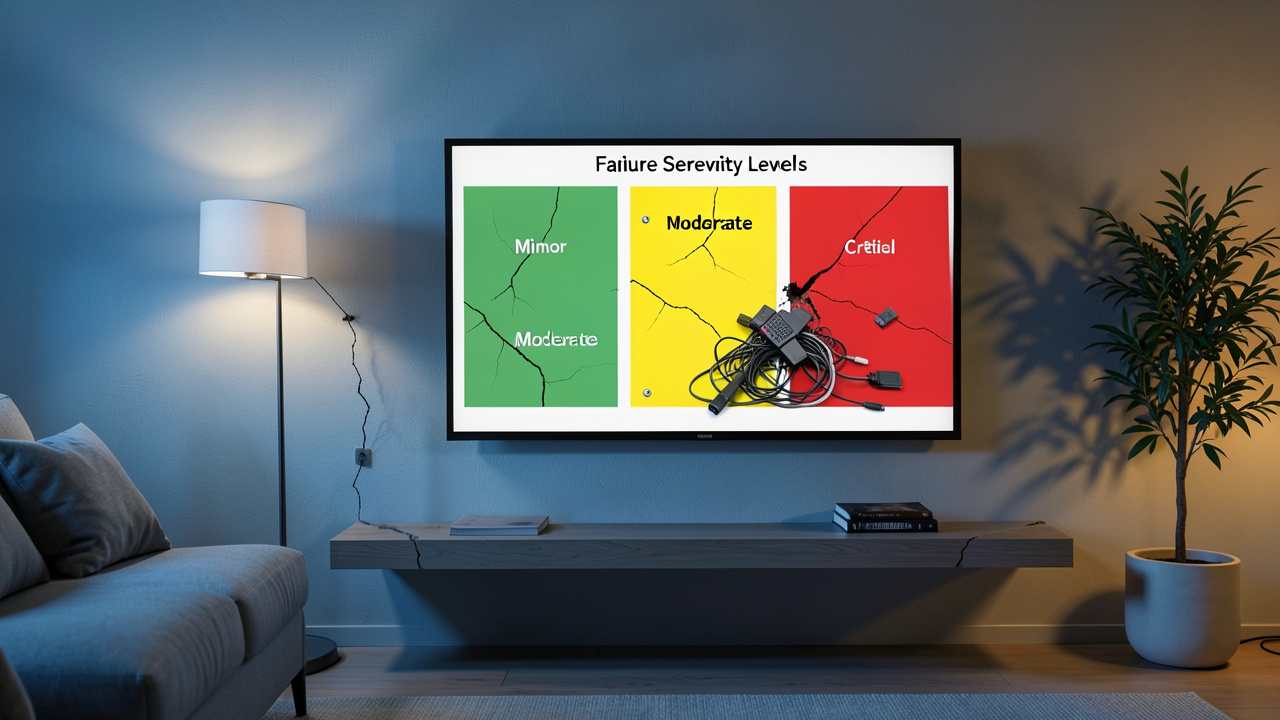
Quick Comparison of Failure Severity Levels
| Warning Sign | Severity | Immediate Action |
|---|---|---|
| Gap between wall and top edge | High | Remove TV and heavy items immediately. Reinforce anchors. |
| Doors and drawers no longer align | Medium | Check internal frame for cracks. Tighten all corner brackets. |
| Visible cracking around screw heads | High | Stop using the stand. The fiberboard is failing internally. |
| Wobble when touched | High | Secure the unit to the wall studs with new hardware. |
| Overheating electronics inside cabinet | Medium | Add ventilation holes or relocate components immediately. |
What Causes a Floating TV Stand to Fail Internally?
Understanding the mechanics of failure helps you spot problems early. A floating TV stand relies entirely on its back panel and mounting brackets to transfer weight into the wall. Unlike a cabinet with legs, the bottom panel has no floor support. Over time, gravity creates a lever force called the “shelf effect.” The front edge pulls down, and the top edge pulls away from the wall.
According to the, tip-over incidents involving furniture and TVs contribute to thousands of emergency room visits every year. Most of these incidents involve units that showed clear warning signs for weeks or months before the failure. The average 72-inch floating media console weighs between 80 and 100 pounds before you add the TV and components. That load creates over 200 pounds of pull force on the top anchors.
Warning: A child climbing on a floating shelf or TV stand dramatically increases the leverage force. A sudden 30-pound pull from a child can exceed the holding capacity of stretched drywall anchors instantly. Always secure the unit with this possibility in mind.
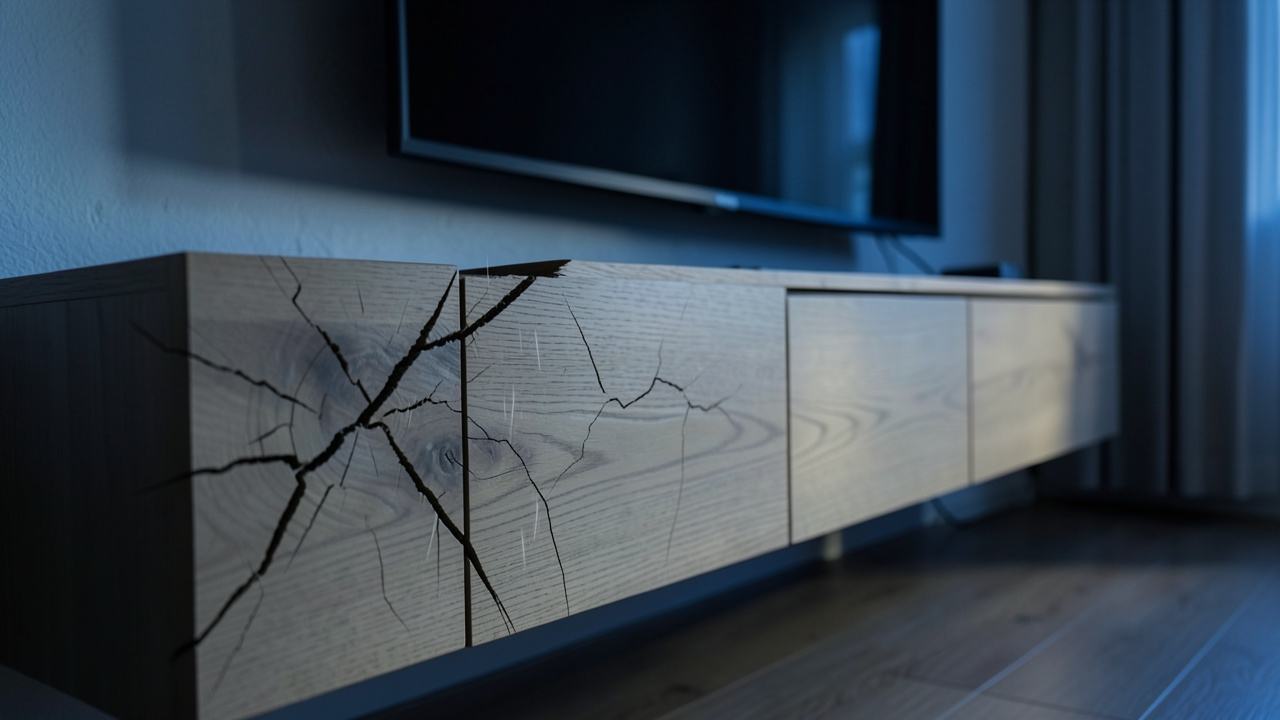
1 – Visible Cracks and Creaking Sounds
Your floating TV stand should be silent. If you hear creaking, popping, or cracking sounds when you walk near it, the internal structure is under heavy stress. These sounds come from wood fibers snapping or screw threads pulling through particle board. Cracks often start near the screw heads on the back panel or at the corners of the cabinet doors.
Where to Look for Cracks
- Back panel corners: The thin fiberboard nail strip often splits first because it holds the mounting bracket.
- Side panel joints: Check where the sides meet the top and bottom panels. Gaps here mean the cam locks or dowels are failing.
- Front bottom edge: This area bears the most weight. Cracks here indicate the shelf is slowly separating.
is a common material for these units because it is cheap and heavy. However, MDF has poor screw-holding strength once the fibers are compromised. A single crack can split wide open within weeks.
2 – The Floating Stand Is No Longer Level
A sagging floating TV stand is one of the easiest warning signs to spot. Place a spirit level along the top edge. If the bubble is off-center, the unit is failing. Sagging usually happens in the middle of a long span. The weight of the TV and components bends the shelf material downward.
Manufacturers often claim a weight capacity of 100 pounds or more. But this rating assumes the TV weight is spread evenly across the top surface. Most TVs have a narrow central base that concentrates all the force into a four-inch section of the shelf. This concentrated pressure often exceeds the material limit.
Tip: If your stand is sagging but still attached to the wall, you can install a cosmetic support leg in the center. Steel legs that touch the floor can relieve 50 percent of the structural stress and extend the life of the stand significantly.
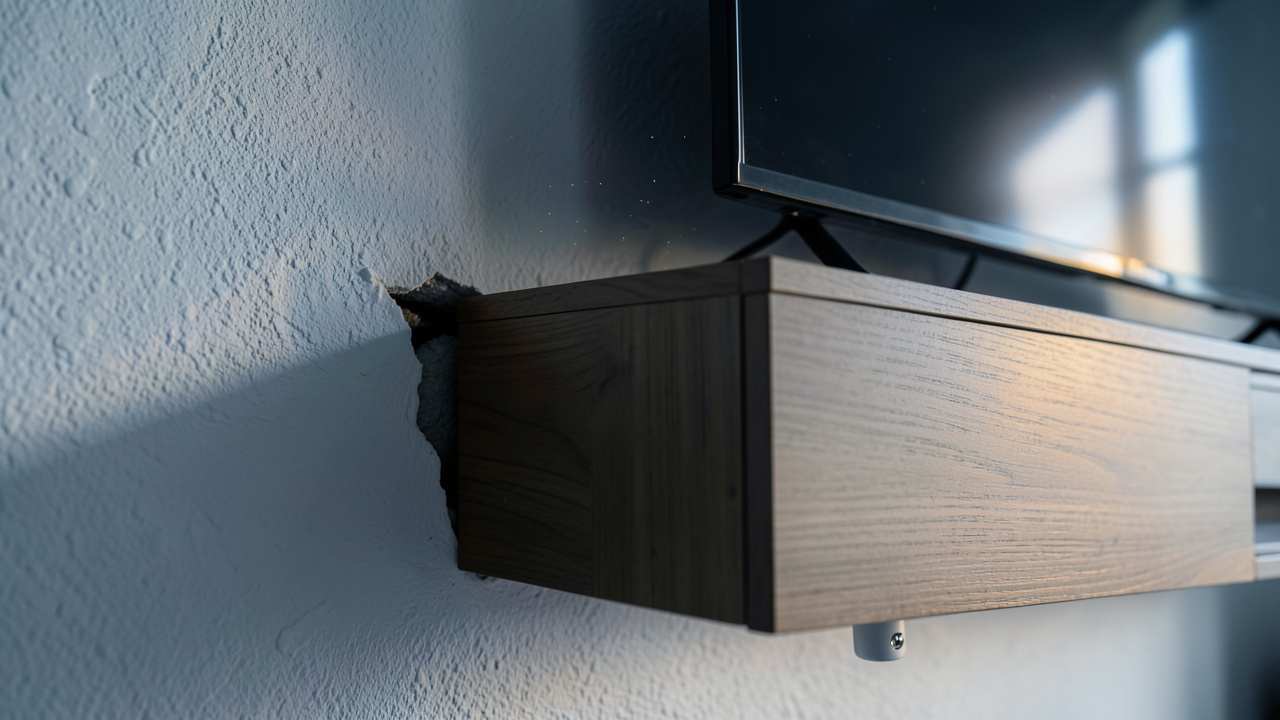
3 – Gaps Between the Wall and the Stand
This is the most critical warning sign. When you look at your floating TV stand from the side, the top edge should sit flush against the drywall. If you see a gap, the unit is physically pulling away from its anchors. The gap means the shear load has overcome the friction holding the lag bolts or toggle bolts in place.
How to Measure the Gap
- Stand 10 feet away from the unit and look at the top ridge against the wall.
- Slide a piece of paper between the top edge of the stand and the wall. If it slides in easily, you have a gap.
- Measure the gap at both ends and in the middle. A gap that is wider in the center indicates a bowed wall or a failing center anchor.
A gap of 1/4 inch or more is a critical danger zone. The top anchors are likely pulling out of the studs or the drywall. In a tip-over scenario, the unit falls forward and down. The TV, stand, and anything on it crash to the floor within seconds.
4 – Stuck or Misaligned Doors and Drawers
Your cabinet doors and drawers are a direct indicator of internal frame squareness. If a door suddenly starts rubbing against the frame, the cabinet is twisting under load. Floating TV stand frames rely on perfect 90-degree angles at every corner. Weight pushes down on the top, which pushes out on the sides. This “racking” effect makes square frames turn into parallelograms.
- Doors that pop open: The latch no longer aligns with the strike plate.
- Drawers that bind: The slides are no longer parallel. You have to yank or push hard to close them.
- Uneven gaps: The gap around a door is wider at the top than at the bottom (or vice versa).
If you only have one misaligned door, check the internal cam locks in that section. These plastic or metal connectors often snap under tension. Fixing a broken cam lock can restore structural stability without replacing the entire unit.
5 – Your TV or Components Are Overheating
Heat is a silent enemy of both electronics and wood furniture. A floating TV stand often sits tightly against the wall with very little airflow behind it. The enclosed cabinet traps heat from your receiver, game console, or streaming device. High heat dries out the wood fibers and weakens the glue that holds the panels together.
According to the, overheating electronics inside enclosed cabinets is also a leading cause of furniture fires. The combined heat from a gaming console and a cable box can reach 140 degrees Fahrenheit inside a tight cabinet space.
Important: If the wood surface feels hot to the touch, the internal adhesive is degrading. Consider cutting ventilation ports in the back panel or installing a small USB-powered fan. Relocating heat-generating devices to an open shelf is the safest option.
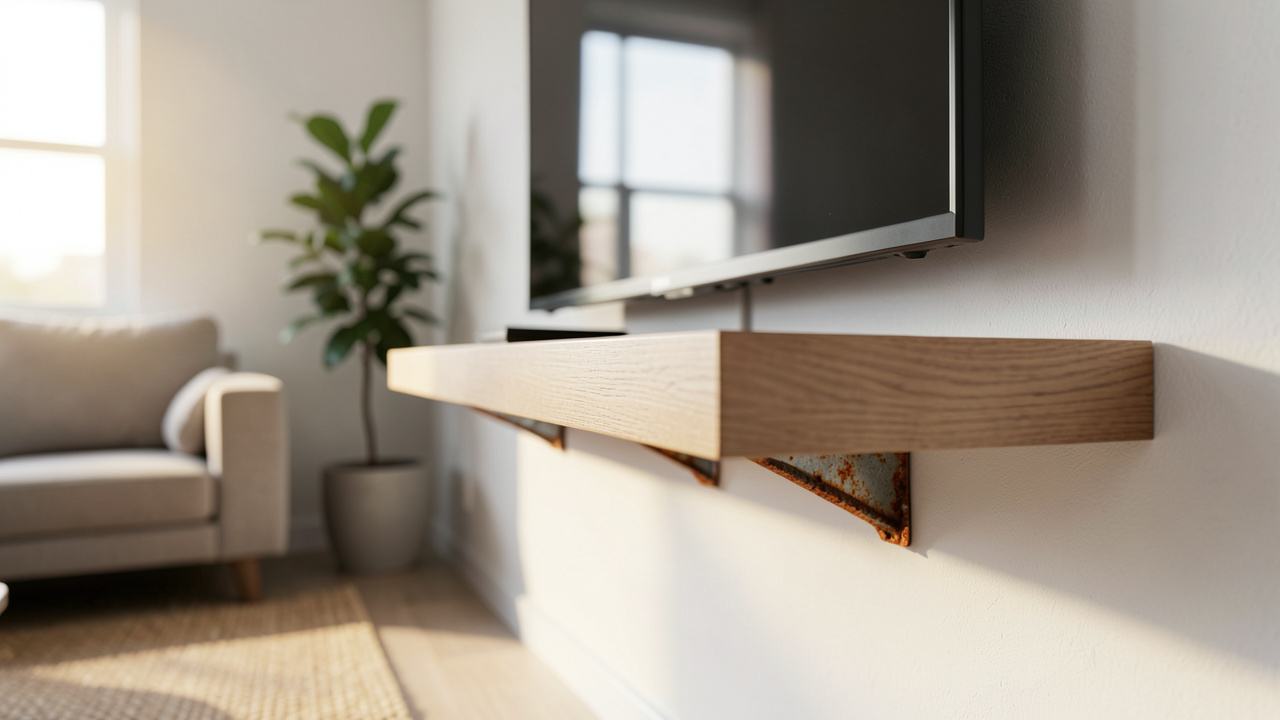
6 – The Wall Mount Brackets Are Rusting or Bending
The metal brackets that secure your floating TV stand to the wall are the last line of defense against collapse. Examine these brackets carefully. Look for rust, corrosion, or visible bending of the metal. Rust weakens steel significantly over time. A bracket that was 1/8 inch thick at installation might have rusted down to half that thickness in a humid environment.
Common Bracket Failure Points
- Weld joints: The point where the horizontal shelf support meets the vertical wall plate often cracks first.
- Screw holes: The metal around the screw hole can tear if the screw was over-tightened or if the bracket is too thin for the load.
- Zinc plating: If the plating is flaking off, the steel underneath will begin to rust within months.
If you notice any rust or bending, replace the brackets immediately. A complete bracket failure results in the entire unit falling straight down. This often snaps the TV HDMI cables and can pull the TV off the wall with it.
7 – The Stand Vibrates or Wobbles When Touched
A stable floating TV stand feels like it is part of the wall. If you touch it and feel any vibration or wobble, the mounting system has play. Wobbling occurs when the screws or bolts are not fully tightened into the studs, or when the drywall around the anchor has crumbled. Test this by placing your hand on top of the stand and pushing gently side to side. If the top edge moves more than 1/8 inch, you have a problem.
and other large furniture manufacturers have issued multiple recalls over the years for furniture wobble and tip-over hazards. A wobbly unit is not just annoying. It creates a dynamic load. Every vibration from sound waves or footsteps stresses the anchors more than static weight alone.
- Place a glass of water on the top shelf.
- Walk heavily across the room. If the water ripples, the stand is transferring vibration poorly.
- Touch the side panel while someone else walks. If you feel movement, the wall anchors are loose.
8 – Screws and Anchors Are Stripped or Pulling Out
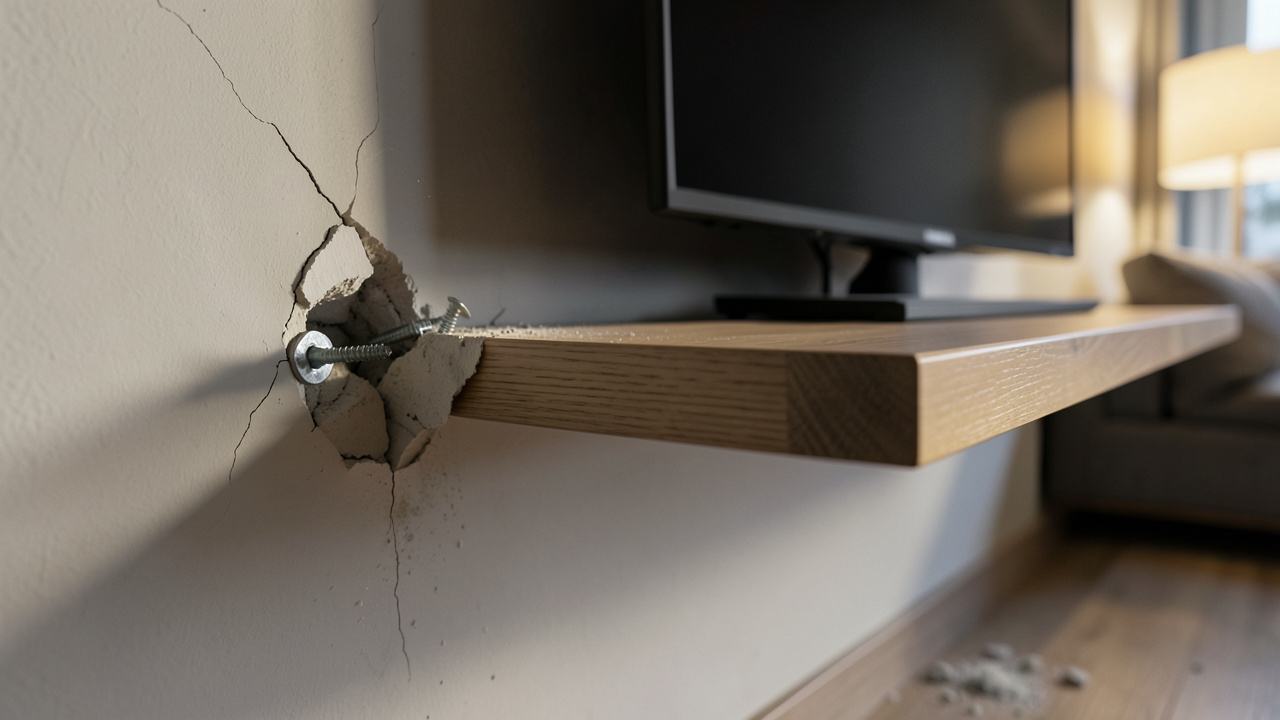
This is the most technical but most important warning sign. You need to visually inspect the mounting hardware. Open the cabinet doors and look at the back panel. The screws that hold the mounting bracket to the cabinet should be tight and flush against the wood. If you see screw heads embedded deep into the wood (countersinking themselves), the material is crushing under the load.
Stripped screw holes are common in particle board and MDF. The material has low tear-out resistance. Once the screw threads lose their grip, the screw pulls out completely with minimal force. You can test this by tapping each screw head with a screwdriver. If the screw feels loose, it has already stripped its hole.
How to Fix Stripped Screw Holes in a Floating TV Stand
- Toothpick and glue method: Remove the screw. Coat wooden toothpicks in wood glue. Push them into the hole. Snap them off flush. Let the glue dry. Re-insert the screw. The toothpicks give the screw new threads to bite into.
- Use toggle bolts: If the screw is pulling out of the drywall behind the unit, replace the screw with a hollow-wall toggle bolt. Toggle bolts spread the load across a larger area of drywall.
- Reposition the bracket: If the hole is completely destroyed, move the mounting bracket up or over by 2 inches. Screw into fresh, undamaged material.
Warning: Do not use longer screws to fix stripped holes. A longer screw that enters at the same angle will still find the same empty cavity. You need to change the screw position or fill the hole entirely before re-threading.
How to Test Your Floating TV Stand Right Now
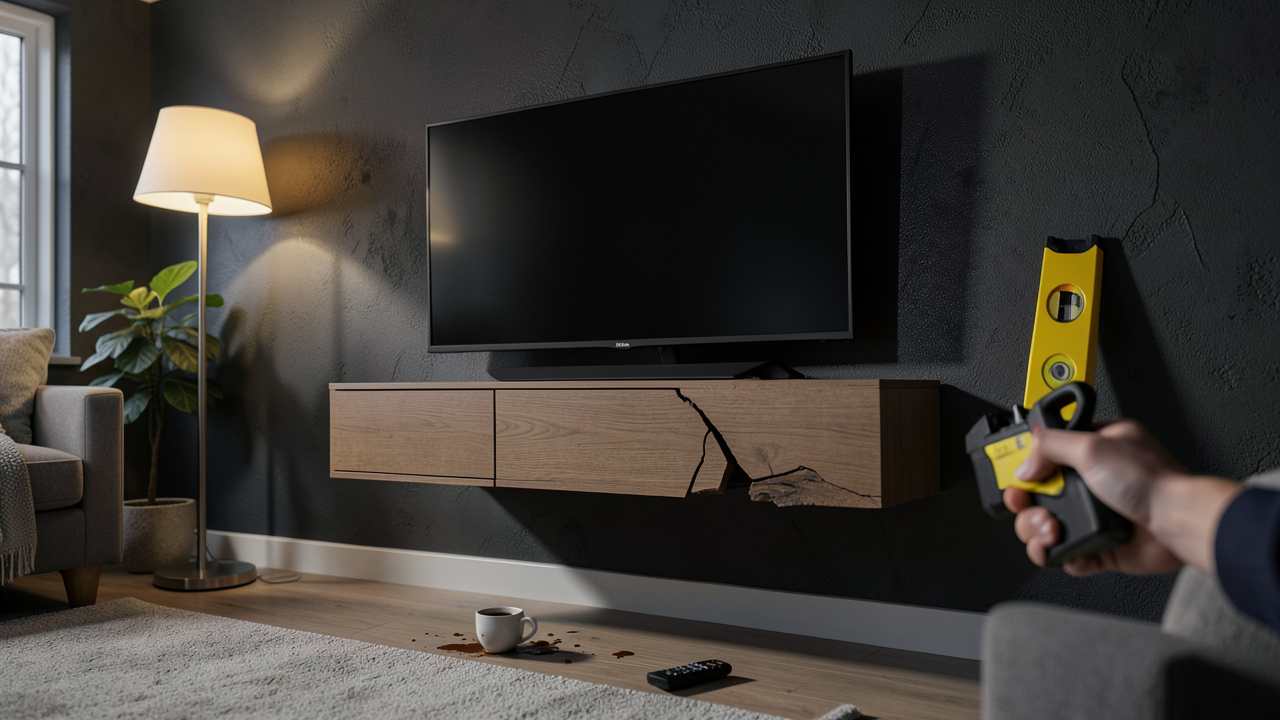
Use this 5-step test to evaluate the current health of your floating TV stand.
- Visual inspection. Stand 10 feet away. Look for a dip in the middle or a gap at the top edge. If you see either, move to step 3 immediately.
- Gap test. Slide a standard business card behind the top edge at both ends and the center. If the card goes in deeper than 1/4 inch, your anchors are failing.
- Weight removal test. Remove the TV and all heavy components. Push down on the front edge with 30 pounds of force. If the unit dips, the internal frame is compromised.
- Pivot test. Stand to the side of the unit. Push the left side firmly. A solid unit stays perfectly still. A failing unit sways slightly at the top edge.
- Hardware torque test. Using a screwdriver, check every visible screw head that attaches the brackets to the cabinet. If any screw turns easily without resistance, the hole is stripped.
What to Do If You Notice These Warning Signs
Do not ignore the signs. A collapsing TV stand can destroy your TV, damage your floor, and seriously injure a child or pet. The first step is to remove all weight from the unit. Take the TV off the stand and place it on the floor against a wall. Remove all components and decorative items. Once the unit is empty, assess the damage.
- If the wall anchors are loose but the stand is intact, simply re-drill into the studs and install new lag bolts. Use a to locate solid wood behind the drywall.
- If the MDF is cracked or splitting, the structural integrity of the cabinet is gone. You need to replace the unit or reinforce the back panel with a sheet of 3/4-inch plywood screwed across the entire back surface.
- If the metal mounting brackets are bent or rusted, replace them with heavy-duty ones rated for at least twice the weight of your TV and stand combined.
Tip: Take photos of the damage before you take the unit down. These images are helpful if you plan to file a warranty claim with the manufacturer or if you purchased the unit recently and need a replacement.
Common Myths vs Facts About Floating Furniture Safety
Myth: “Hitting one stud is enough to hold my TV and stand.”
Fact: A single 2×4 stud can support a static TV mount. But a heavy cabinet creates leverage. You need two or three studs or heavy-duty toggle bolts for the cabinet to distribute the load properly. One stud alone creates a pivot point that accelerates pull-out failure.
Myth: “The drywall anchors included in the box are strong enough.”
Fact: Most drywall anchors have a shear strength of 50-75 pounds. A floating TV stand with a TV on it can easily weigh 150 pounds. You must attach the mounting bracket directly to the structural wood studs behind the drywall. Drywall alone cannot support the long-term dynamic load.
Myth: “MDF is just as strong as solid wood for floating shelves.”
Fact: MDF is dense but has poor screw-holding strength once stripped. Solid hardwood or plywood with glued-in threaded inserts provides much longer structural integrity for a floating TV stand. If you are buying a new unit, choose plywood construction over MDF or particle board for any load-bearing furniture.
Frequently Asked Questions
Can I fix a sagging floating TV stand without removing it?
In most cases, sagging means the internal frame has failed. You can sometimes add L-brackets to the bottom edge directly into the studs as a temporary fix. But for long-term safety, you should empty the unit, remove it from the wall, and repair or replace the damaged frame panels.
What is the maximum weight capacity of a floating TV stand?
Capacity varies by material and installation method. A standard floating cabinet using MDF and factory brackets typically holds 50-100 pounds. A unit mounted directly into multiple studs with plywood construction can hold 200 pounds or more, including the weight of the TV. Always check the manufacturer’s specification, but assume it is 20 percent lower than stated for safety.
How often should I check my wall-mounted TV furniture?
Check the stability of your floating TV stand at least twice a year. A good habit is to inspect it whenever you clean behind the TV or when the seasons change. Look at the wall contact points and check for new gaps. Acoustic vibrations from a subwoofer can slowly loosen screws over time.
Will a floating TV stand damage my wall?
Yes, especially if it is improperly installed or removed incorrectly. The brackets require lag bolts into studs or large toggle bolts which leave significant holes. You will need to patch the drywall with spackle and repaint the wall if you decide to remove the unit. Consider this before installation if you are renting.
Can I install a floating TV stand on any wall type?
Solid wood, concrete, or brick walls are ideal for a floating TV stand. Standard drywall alone is not strong enough to support the shear weight of a deep cabinet. You must attach the mounting hardware to the wood studs behind the drywall. For concrete or brick walls, use masonry anchors designed for heavy loads.
Final Thoughts
A failing floating TV stand rarely collapses without warning, but the signs are easy to miss if you are not actively looking for them. Catching a subtle gap or wobble early can save your expensive television and prevent a serious household injury. Test your unit today using the 5-step process provided, and address any concerning symptom immediately, before the structure reaches its breaking point.


