

9 Mistakes Most People Make with Their First Marble Coffee Table
At a Glance The nine most common mistakes with a first marble coffee table include failing…
The nine most common mistakes with a first marble coffee table include failing to seal it, using acidic cleaners, and placing hot items directly on the surface. Marble is porous and chemically reactive, so neglecting regular sealing every six to twelve months allows stains to set and acidic spills to cause permanent etching. Understanding these pitfalls prevents costly damage and keeps the table a lasting centerpiece.
A marble coffee table transforms a living room from ordinary to extraordinary, but its delicate nature catches most new owners off guard. This guide covers the nine critical mistakes people make with their first marble coffee table and shows you exactly how to avoid them.
Simply put, a marble coffee table demands care that goes far beyond what wood or glass require. The most common errors involve neglecting to seal the stone, cleaning it with acidic solutions, and assuming it is indestructible. Avoid these pitfalls, and your table will remain a stunning centerpiece for years.
Marble is a natural material with unique properties. It is porous, relatively soft, and chemically reactive. Many people fall in love with the look but ignore the reality of daily life with natural stone.
Key Takeaways
- Marble requires sealing every six to twelve months to prevent stains from penetrating the porous surface.
- Acidic substances like lemon juice and vinegar can permanently etch polished marble within seconds.
- Honed marble finishes hide scratches and etching far better than high-gloss polished finishes.
- You must use coasters, trivets, and pH-neutral cleaners to keep a marble coffee table looking new.
- Real marble is heavier and more fragile than faux alternatives, so proper floor support and handling matter.
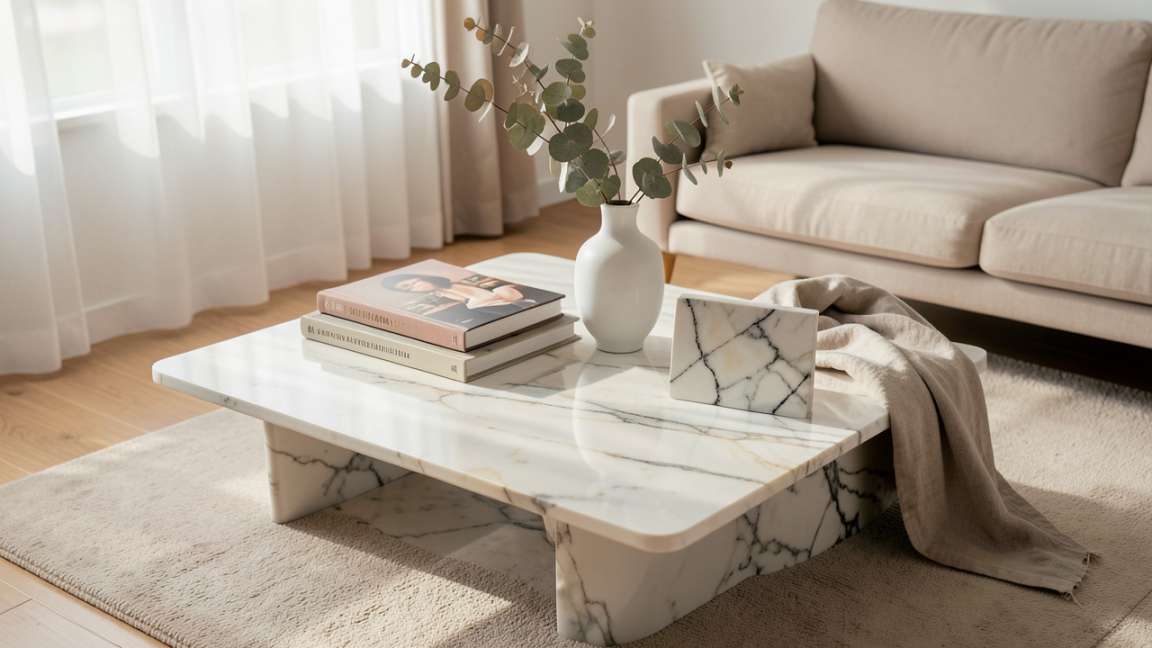
Mistake 1: Confusing Polished With Honed Marble
Polished marble has a glossy, reflective surface. Honed marble has a matte, satin-like finish. These two finishes behave very differently in a home environment.
Polished marble shows every fingerprint, water spot, and etching mark. The high-gloss surface acts like a mirror, which means any imperfection stands out. Honed marble absorbs more light, so small scratches and etching blend into the surface.
According to the, honed marble is significantly more forgiving for high-traffic surfaces. Many homeowners choose polished marble for its luxury appearance, then regret it after the first spill.
Important: If you plan to use your coffee table daily, choose a honed finish. It hides wear much better than polished stone and requires less frequent maintenance.
Mistake 2: Forgetting to Seal the Surface
Marble is naturally porous. Liquids can seep into the stone and cause permanent discoloration. Sealing fills these microscopic pores and gives you time to wipe up spills before they stain.
Most marble tables come pre-sealed from the factory. That seal wears off over time. You need to test your table regularly by placing a few drops of water on the surface. If the water darkens the stone, you need to reseal.
Industry experts recommend sealing a marble coffee table every six to twelve months. High-use tables may need sealing every three months. The cost of a quality sealer is around twenty to forty dollars and takes under an hour to apply.
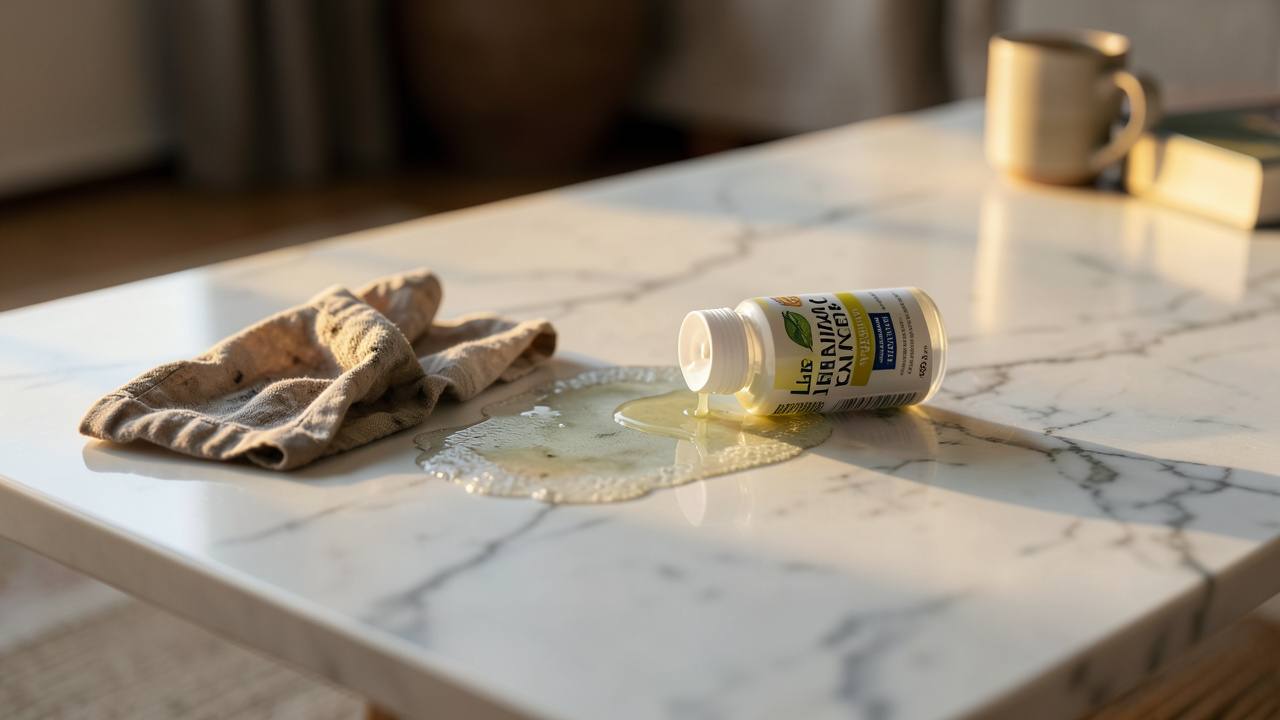
Mistake 3: Using Harsh Cleaners (Lemon, Vinegar, Bleach)
This is the single most common mistake new marble owners make. Vinegar and lemon juice are acidic. Acid reacts with calcium carbonate in marble and causes etching.
Etching appears as dull, white, cloudy spots on the surface. You cannot wipe etching away. It requires re-polishing or professional refinishing to repair. explicitly warn against using acidic cleaners on natural stone.
You must use a pH-neutral cleaner specifically designed for marble. Even mild dish soap can be too harsh if it contains degreasers. Stick to stone-specific cleaning products to stay safe.
Warning: Never use Windex, vinegar, lemon juice, or bleach on marble. Even one application can cause permanent etching that ruins the table’s finish.
Mistake 4: Placing Hot Items Directly on the Surface
Marble is a natural stone that conducts heat. It feels cool to the touch, but sudden temperature changes can cause damage. Placing a hot coffee mug directly on the surface creates thermal shock.
Thermal shock can cause hairline cracks or discoloration. The marble expands rapidly where the heat touches it. This stress creates fractures that may not appear for weeks.
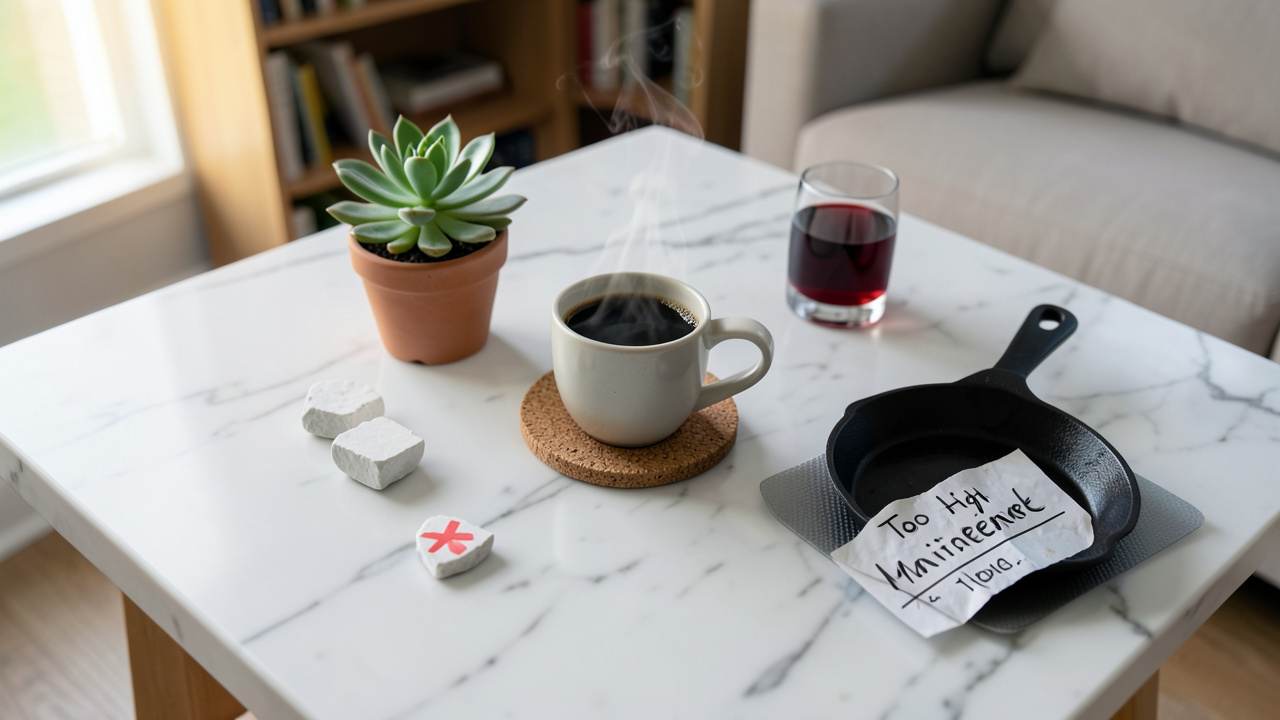
Always use coasters, trivets, or placemats. A simple cork or silicone coaster provides enough insulation to protect the stone. Never assume that marble is heat-proof.
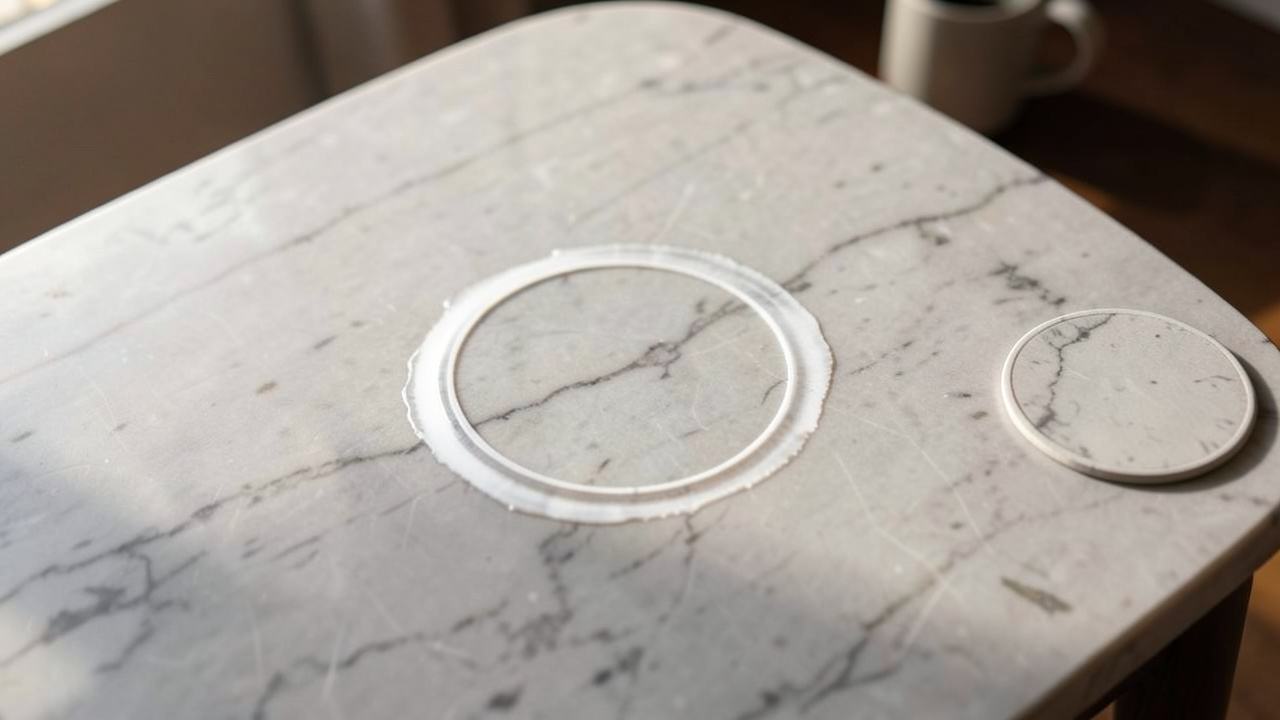
Mistake 5: Skipping Coasters and Trivets
Many people buy a marble coffee table and treat it like a regular table. They place drinks directly on the surface. This is a dangerous habit.
Water itself can leave rings on unsealed marble. Coffee, wine, and citrus drinks are even worse. The acid in these drinks attacks the stone within seconds. According to a study by the, acidic liquids can begin to etch polished marble in under sixty seconds.
Coasters protect your table from both moisture rings and acid etching. Use coasters for every drink, including water. Train everyone in your household to follow this rule.
Mistake 6: Ignoring the Weight of the Table
Marble slabs are extremely heavy. A three-foot by five-foot marble tabletop can weigh over two hundred pounds. Most people do not plan for this weight before delivery.
You need a floor that can support the weight. Hardwood floors and tile floors are usually fine. Carpeted floors may compress under the weight, causing the table to wobble.
Moving a marble table is difficult. You cannot simply slide it across the floor. You need furniture sliders or professional movers. Plan your table placement before it arrives.
Mistake 7: Choosing the Wrong Base or Support Structure
A heavy marble top needs a sturdy base. Many mass-produced tables use thin metal legs that cannot support the weight. This leads to wobbling and potential tipping.
Check the base material. Solid wood bases are generally more stable. Metal bases should have thick gauge steel and cross-bracing. Avoid tables with four thin hairpin legs – these are designed for lightweight wood tops, not marble.
The weight distribution matters too. The marble top should sit flat on the base. Uneven support can cause the stone to crack over time. Place felt pads between the marble and the base to prevent stress points.
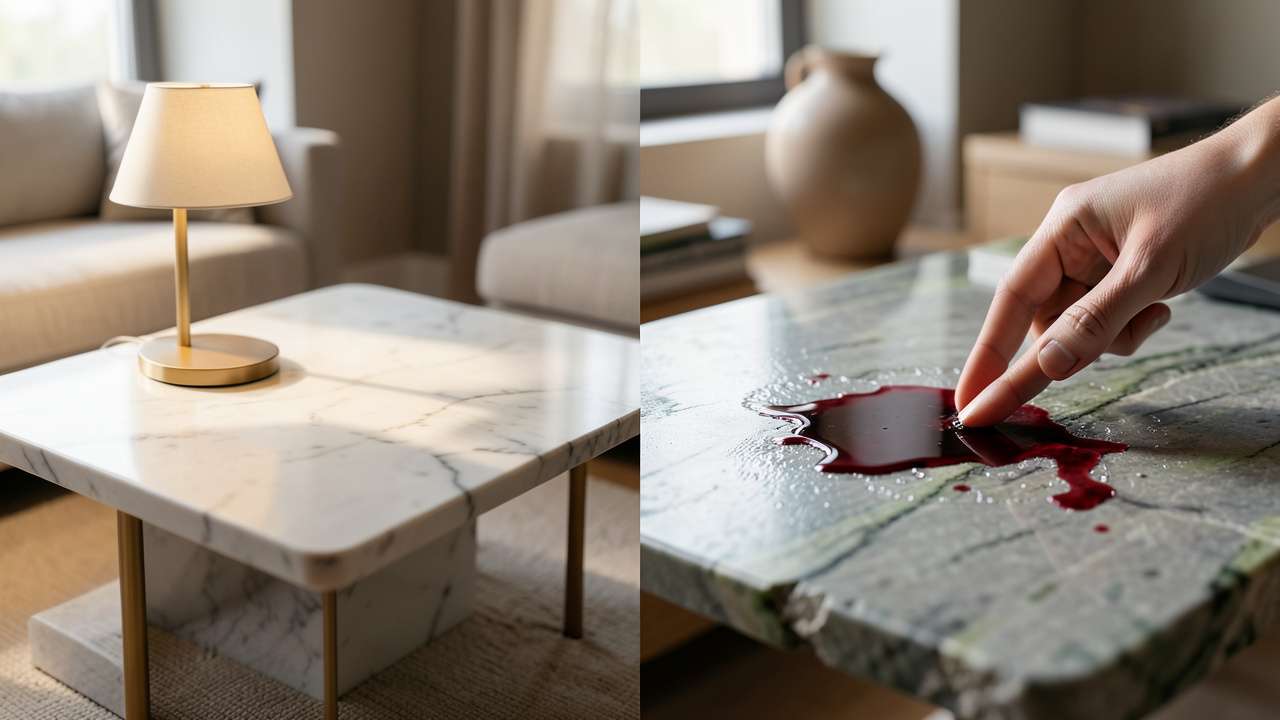
Mistake 8: Assuming All Marble Is the Same
Marble comes in dozens of varieties with different properties. Carrara marble is the most common and affordable. It has a soft gray background with fine, feathery veins.
Calacatta marble is rarer and more expensive. It has a brighter white background with bold, thick veins. It is also denser and less porous than Carrara.
Statuario marble sits between the two. It has a bright white background with elegant, dramatic veins. Each type of marble reacts differently to wear and tear.
Tip: Ask your supplier for the specific type of marble and its origin. Different quarries produce stone with different levels of hardness and porosity.
Mistake 9: Neglecting Regular Maintenance
A marble coffee table requires consistent care. Dust accumulates on the surface and can scratch the finish if you wipe it with a dry cloth. You should dust the table with a microfiber cloth daily.
Spills need immediate attention. Blot the spill with a soft cloth. Do not wipe it – wiping spreads the liquid across the surface. If the spill is acidic, clean the area with a pH-neutral cleaner right away.
You should also rotate decorative items on the table. Vases, candles, and books that sit in the same spot for months can trap moisture and cause discoloration beneath them.
Common Myths About Marble Coffee Tables
Myth 1: Sealing makes marble completely stain-proof
Sealing reduces porosity but does not make the stone waterproof. Spills can still stain if left on the surface for extended periods. You must still clean up spills promptly.
Myth 2: Glass cleaner is safe for marble
Most glass cleaners contain ammonia or alcohol. These chemicals dull the polish on marble over time. You must use a stone-specific cleaner to maintain the shine.
Myth 3: Marble is too high maintenance for a coffee table
Honed marble with proper sealing is perfectly livable for most households. The key is using coasters, cleaning with stone-safe products, and sealing the table regularly.
Quick Comparison: Marble vs Other Coffee Table Materials
| Material | Durability | Maintenance | Cost |
|---|---|---|---|
| Marble | Low to moderate (scratches, etches) | High (sealing, pH cleaners) | High |
| Solid Wood | Moderate to high | Low (dusting, occasional polish) | Moderate to high |
| Glass | Low (cracks, chips, fingerprints) | Moderate (streak-free cleaning) | Low |
| Metal | Very high (dings, scratches) | Low (dusting) | Low to moderate |
How to Choose the Right Marble Coffee Table
Start with the finish. Choose honed if you want a low-maintenance look. Choose polished only if you are willing to clean and buff regularly.
Next, check the thickness. A thicker slab (three-quarters of an inch or more) is less likely to crack. Thinner slabs are lighter but more fragile.
Finally, inspect the base. Make sure it is sturdy enough for the weight. Look for solid wood or thick metal frames. Avoid bases that rely on glue or weak joinery.
- Honed finishes hide scratches and etching better than polished finishes.
- Thicker marble slabs (minimum 3/4 inch) offer better structural integrity.
- Solid wood or thick metal bases provide the best support for heavy marble tops.
- Felt pads between the marble and base prevent stress cracks.
Pro Tips for Long-Term Marble Care
- Dust the table daily with a microfiber cloth to prevent scratches.
- Clean spills immediately by blotting, not wiping.
- Use only pH-neutral stone cleaners for weekly cleaning.
- Reseal the table every six to twelve months.
- Place coasters and trivets on the table permanently as reminders for guests.
Frequently Asked Questions
Can I place a hot coffee mug directly on a marble coffee table?
No. Extreme heat can cause thermal shock, leading to cracks or discoloration. Always use a coaster or trivet. The temperature contrast between a hot mug and cool stone is the main risk factor.
What is the best cleaner for a marble coffee table?
The best cleaner is a pH-neutral, stone-specific product. You can also use a few drops of mild dish soap mixed with warm water. Never use vinegar, lemon, bleach, or ammonia on marble.
How often should I seal my marble coffee table?
Most marble tables require sealing every six to twelve months. You can test the seal by dropping water on the surface. If the water darkens the stone, you need to reseal immediately.
Can scratches be removed from a marble coffee table?
Yes, light scratches and etching can be buffed out using a marble polishing powder. Deeper damage may require professional refinishing. Honed finishes show scratches much less than polished finishes.
Is real marble worth the maintenance compared to faux marble?
Real marble offers unique veining patterns and a cool-to-touch feel that faux materials cannot replicate. If you are willing to follow the care routine, real marble is a worthwhile investment. If you want zero maintenance, choose porcelain or high-quality quartz instead.
Final Thoughts
A marble coffee table is a long-term investment in your home’s aesthetic. The most common disasters come from a lack of knowledge about porosity and acidity. By following the care tips in this guide, you get to enjoy the luxury of real stone without the constant fear of damage. Your table will stay beautiful for years with just a few simple habits.


