

Does Your Coffee Table Need Replacing or Just a Simple Repair?
At a Glance Most coffee table issues like scratches, water rings, or loose legs can be…
Most coffee table issues like scratches, water rings, or loose legs can be repaired at home for under $30 in materials, while structural damage or repair costs exceeding half the price of a new table warrant replacement. Understanding this distinction saves money and reduces furniture waste, as over 9 million tons of furniture end up in landfills annually. A quick assessment of damage severity and repair cost relative to replacement value provides a clear, cost-effective answer for any coffee table problem.
Your coffee table gets used every day. Spills, scratches, and wobbly legs happen over time.
This guide walks you through the decision: does your coffee table need replacing or just a simple repair.
Quick Verdict: Simply put, most coffee table issues – scratches, loose legs, minor water rings – can be fixed in under an hour with basic tools and materials. You only need a replacement when the structure is compromised, the damage is widespread, or the repair cost exceeds 50 percent of a new table’s price.
Understanding the difference between cosmetic damage and structural failure saves you money. It also reduces furniture waste. According to the, over 9 million tons of furniture end up in landfills each year. Repairing instead of replacing helps the environment.
Key Takeaways
- Most scratches, water rings, and loose joints on a coffee table can be repaired at home for under 30 dollars in materials.
- You should replace your coffee table when it has structural damage like cracked legs, broken frames, or severe veneer bubbling across the surface.
- The cost to repair a coffee table averages 50 to 150 dollars for professional work, while a new mid-range table costs 200 to 600 dollars.
- Wood glue, clamps, sandpaper, wood filler, and stain are the five basic tools needed for most common coffee table repairs.
- Refinishing a solid wood coffee table extends its life by 5 to 10 years and costs much less than buying a replacement.
How to Assess Damage and Decide
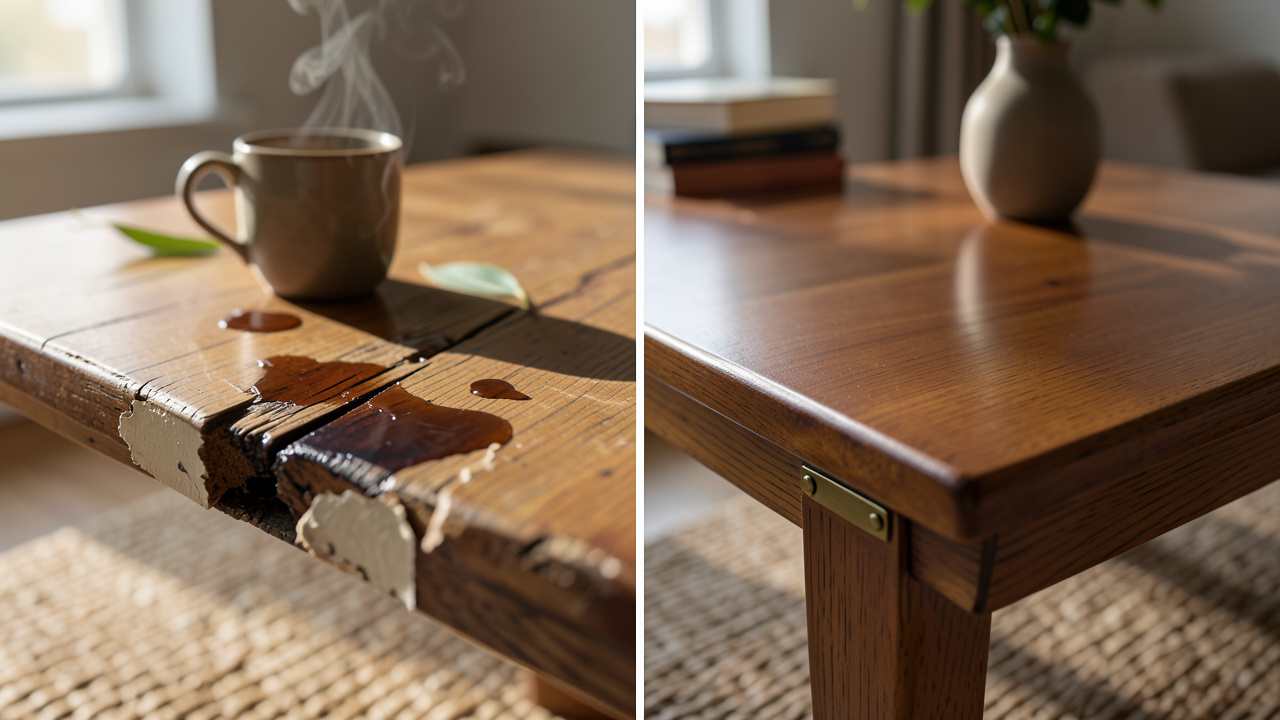
Start by looking at your coffee table and asking three questions. First, is the damage cosmetic or structural? Second, how much would a repair cost versus a new table? Third, do you have the time and tools to fix it?
Cosmetic damage includes scratches, scuffs, water rings, and minor dents. These issues affect the look but not the function. You can fix them with common household supplies. Structural damage includes cracked legs, broken joints, wobbly frames, and split wood. These issues make the table unsafe or unusable.
Warning: Do not use a coffee table with cracked legs or a broken frame. It can collapse under weight and cause injury or damage. Repair structural issues immediately or replace the table.
Here is a simple assessment checklist you can use right now:
- Check the legs: Are all four legs stable and level? Wiggle each one gently. If any leg moves, the joint is loose.
- Check the surface: Run your hand over the top. Feel for raised veneer, deep scratches, or soft spots that indicate water damage.
- Check the frame: Look underneath the table. Are the corner joints tight? Is there any cracking or splitting in the wood?
- Check the finish: Look at the color and sheen. Is the finish worn off in spots? Are there white water rings or dark stains?
- Check the hardware: Are screws, bolts, or brackets missing or loose? Tighten or replace them as needed.
According to, the average cost for minor furniture repair is 50 to 150 dollars. Major repairs can run 200 to 400 dollars. Compare that to a new coffee table from a store like or, which costs 150 to 800 dollars depending on material and style.
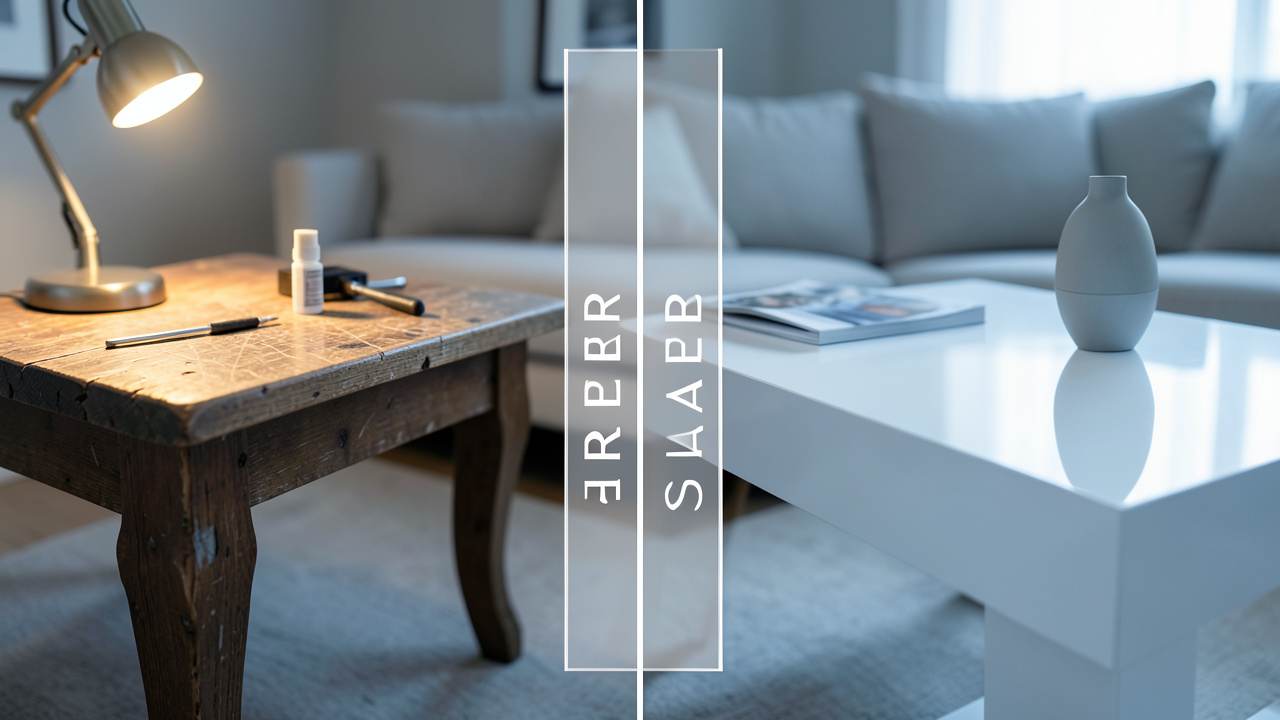
Quick Comparison Table: Repair vs Replace
| Factor | Repair | Replace |
|---|---|---|
| Cost | 5 to 150 dollars | 150 to 800 dollars |
| Time | 30 minutes to 2 days | 1 to 4 weeks for delivery |
| Skill level | Beginner to intermediate | None required |
| Tools needed | Basic household tools | None |
| Environmental impact | Low – keeps item out of landfill | High – adds to furniture waste |
| Best for | Minor damage, quality pieces | Major damage, worn-out tables |
Common Repairs You Can Do Yourself
Many coffee table problems have simple solutions. You do not need to be a woodworker. Most repairs take less than an hour and use basic tools you may already own.
Fix Scratches and Scuffs
Light scratches affect the finish but not the wood. You can fix them in minutes. Use a walnut or pecan half and rub it over the scratch. The natural oils darken the scratch and blend it with the surrounding wood. For deeper scratches, use wood filler in a matching color. Apply the filler with a putty knife, let it dry, and sand it smooth. Then apply a matching stain or touch-up marker.
Remove Water Rings
White water rings come from moisture trapped in the finish. They are not permanent. Place a clean cloth over the ring and set a warm iron on it for 10 to 15 seconds. The heat pushes the moisture out of the finish. Check the spot and repeat if needed. For stubborn rings, use a mixture of equal parts white vinegar and olive oil. Rub it into the ring with a soft cloth moving with the grain of the wood.
Tighten Loose Legs
Loose legs usually mean the joint is worn. Apply wood glue to the joint and clamp it for 24 hours. For tables with screws or bolts, remove the hardware, apply glue, and reattach. If the screw holes are stripped, fill them with toothpicks dipped in wood glue. Break the toothpicks off flush, then reinsert the screw. The toothpicks give the screw fresh wood to grip.
Fix Wobbly Frames
A wobbly table often has loose corner brackets or cross braces. Turn the table over and tighten all visible screws and bolts. If the wobble continues, apply wood glue to the loose joints and add corner braces for extra support. You can find corner braces at any hardware store. According to, a pack of four corner braces costs around 5 dollars.
Refinish the Surface
Refinishing works best for solid wood tables with worn or damaged finishes. You strip the old finish with a chemical stripper or sand it off with 80-grit sandpaper. Then sand with 120-grit and 220-grit for a smooth surface. Apply a new stain if you want to change the color. Seal it with polyurethane or furniture wax. The whole process takes 1 to 2 days but extends the life of the table significantly.
Important: Only refinish solid wood tables. Veneer tables have a thin layer of real wood over MDF or particle board. Sanding through the veneer ruins the table. Check the underside or an inconspicuous spot to confirm the material before you start.
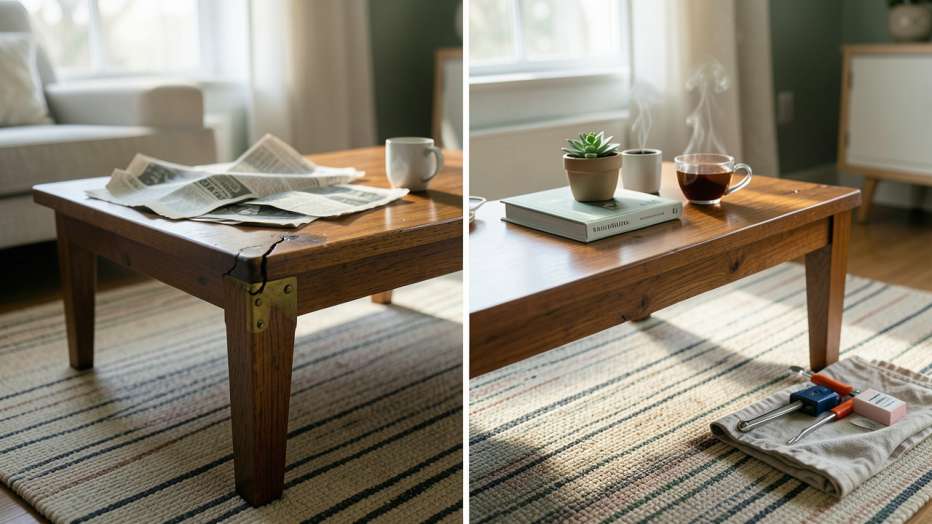
Step-by-Step Decision Process
Use this process when you are unsure whether to repair or replace. Follow the steps in order.
- Inspect the table fully. Look at the legs, surface, frame, and finish. Make notes on each type of damage. Separate structural issues from cosmetic ones.
- Check the material. Solid wood, veneer, MDF, glass, and metal each have different repair options. Solid wood is the easiest to repair. Veneer requires more care. MDF and particle board cannot be refinished.
- Estimate the repair cost. Add up the cost of supplies or professional labor. Compare that to the price of a new table of similar quality. If the repair cost is over 50 percent of a new table, consider replacing.
- Evaluate the table’s value. Is this a high-quality piece or a budget item? Antique tables, solid hardwood tables, and handmade pieces are worth repairing. Cheap flat-pack tables often cost more to repair than to replace.
- Decide based on your skills and time. If you can do the repair yourself in an afternoon, that is almost always worth it. If you need to hire a pro and wait a week, the balance tips toward replacement.
When Replacement Is the Better Option
Sometimes repair does not make sense. Here are the situations where you should replace your coffee table instead of fixing it.
- Severe structural damage. If the frame is cracked in multiple places, the legs are split, or the table cannot support weight safely, replacement is the only option. Repairing major structural damage often costs more than a new table.
- Widespread veneer damage. When the veneer is bubbling, peeling, or chipped across the entire surface, fixing it requires replacing the veneer entirely. That is a specialized job that costs 200 to 500 dollars for a coffee table.
- Outdated style or size. If your table no longer fits your space or your decor, repair does not change that. A new table gives you the look and dimensions you want now.
- Multiple types of damage. A table with scratches, loose joints, water damage, and worn finish needs extensive work. The time and money add up quickly. Starting fresh is often simpler.
- Water damage that caused rot. Soft, dark spots on the wood surface mean rot has set in. You cannot reverse rot. The affected area must be cut out and replaced. For a large surface like a coffee table, replacement is usually the answer.
Warning: If you smell mildew or see dark stains on the underside of the table, the wood may have hidden rot. Do not try to repair a rotted table. The structure is compromised and the mold can affect your indoor air quality. Replace it.
Cost Comparison: Repair vs Replace
| Repair Type | DIY Cost | Professional Cost | New Table Cost |
|---|---|---|---|
| Scratch repair | 5 to 10 dollars | 50 to 100 dollars | 150 to 600 dollars |
| Water ring removal | 0 to 5 dollars | 40 to 80 dollars | 150 to 600 dollars |
| Loose leg repair | 5 to 15 dollars | 60 to 120 dollars | 150 to 600 dollars |
| Full refinish | 30 to 60 dollars | 150 to 300 dollars | 150 to 600 dollars |
| Veneer repair | 15 to 30 dollars | 100 to 250 dollars | 150 to 600 dollars |
| Frame replacement | N/A | 200 to 400 dollars | 150 to 600 dollars |
This table shows that DIY repair is almost always cheaper than replacement. Even professional repair beats buying new in most cases. The exception is full frame replacement, where the cost matches the price of a new table.
Common Myths vs Facts
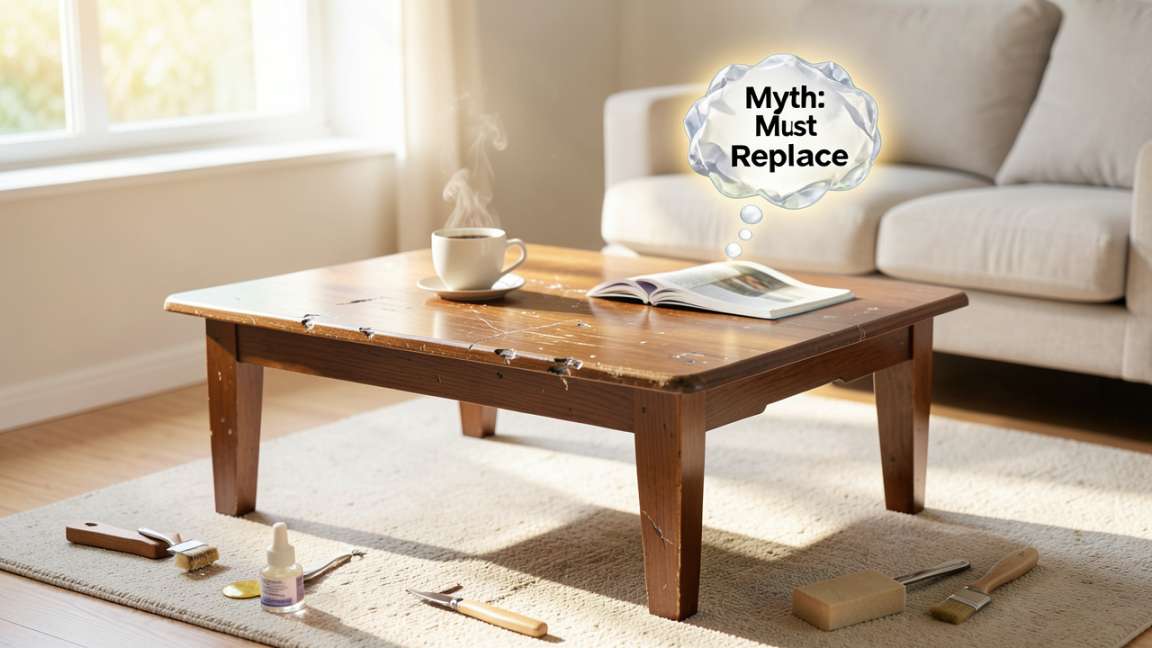
Several myths make people replace coffee tables that could be fixed. Here are the most common ones.
- Myth: Scratches mean the table is ruined. Fact: Most scratches only affect the finish, not the wood. A walnut rub, touch-up marker, or light sanding hides them completely. The table stays strong and usable.
- Myth: Water rings are permanent. Fact: White water rings sit in the finish layer, not the wood. A warm iron or vinegar and oil mixture removes them in minutes. Dark water stains are harder to fix and may indicate deeper damage.
- Myth: Professional repair always costs more than a new table. Fact: A full professional refinish costs 150 to 300 dollars for a coffee table. A new solid wood table of similar quality costs 400 to 800 dollars. Repair saves you money in most cases.
Pro Tips for Coffee Table Care
Preventing damage is easier than fixing it. Follow these tips to keep your coffee table looking good for years.
- Use coasters and placemats. Coasters protect the surface from water rings and heat marks. Placemats protect against scratches from plates and boxes. Make it a household rule for everyone.
- Clean spills immediately. Liquid seeps into the finish and wood within minutes. Blot spills with a dry cloth right away. Do not wipe – wiping spreads the liquid over a larger area.
- Dust with a soft cloth. Use a microfiber cloth or soft cotton rag. Avoid feather dusters that can scratch the finish. Dust picks up grit that acts like sandpaper over time.
- Apply furniture polish sparingly. Use a polish designed for your table’s finish. Spray it on the cloth, not the table. Too much polish builds up and attracts more dust.
- Keep the table out of direct sunlight. UV light fades the finish and dries out the wood over time. Use curtains or blinds during peak sunlight hours. Rotate decorative items to prevent uneven fading.
Tip: Place felt pads under the legs of your coffee table. They prevent scratches on your floor and reduce wear on the table’s legs. Replace the pads every 6 to 12 months as they wear down.
Resources and Tools
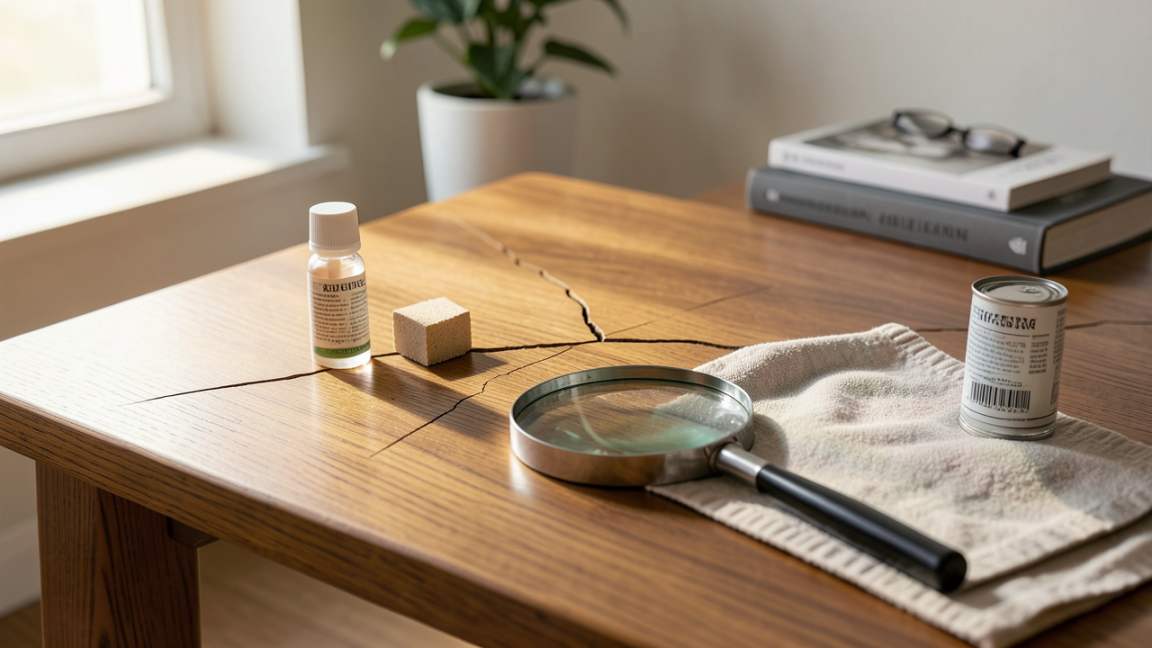
Here are the tools and resources you need for most coffee table repairs.
- Wood glue – Essential for loose joints and leg repairs. Standard PVA wood glue works on most wood types.
- Sandpaper assortment – Get 80, 120, and 220 grit for stripping and smoothing surfaces.
- Wood filler – Use for deep scratches and dents. Choose a color that matches your table’s stain.
- Furniture clamps – Needed for gluing joints and holding pieces together while the glue dries.
- Touch-up markers – Quick fix for scratches and scuffs on finished surfaces.
- How-to guides – The Furniture Restoration Guild offers free guides for common repairs.
Frequently Asked Questions
Can you repair a coffee table with a broken leg?
Yes, in most cases. If the leg is solid wood, you can glue and clamp the break. If the leg is completely split, replace it with a matching leg from a hardware store. For tables with threaded leg inserts, replace the insert rather than the whole table.
How much does it cost to refinish a coffee table yourself?
The cost is typically 30 to 60 dollars. You need chemical stripper or sandpaper, stain, polyurethane or wax, and applicators. This is much less than the 200 to 600 dollars for a new solid wood table of similar quality.
Is it worth repairing an IKEA coffee table?
It depends on the damage. IKEA tables use particle board and veneer. Minor scratches and loose screws are easy to fix. Major structural damage is usually not worth repairing because the materials do not hold up well to extensive work. Replacement often makes more sense for IKEA furniture.
What is the best way to hide deep scratches in a coffee table?
Fill deep scratches with wood filler in a matching color. Let it dry completely, then sand it flush with 220-grit sandpaper. Apply a touch-up marker or stain over the filler. For the best results, use a filler that matches your table’s wood species and stain color.
Can you fix a wobbly coffee table without taking it apart?
Sometimes. Check if the wobble comes from loose screws or bolts. Tighten them from underneath. If the wobble comes from loose joints, you need to disassemble the joint, apply glue, and clamp it. Corner braces added to the inside of the frame can also stabilize a wobbly table without full disassembly.
Final Thoughts
Most coffee table problems have simple, low-cost fixes. Scratches, water rings, and loose legs take less than an hour to repair. Replace the table only when the structure is unsafe or the damage covers the entire surface. A good coffee table can last 10 to 20 years with basic care and timely repairs. Check your table now – you may only need a few minutes and basic tools to bring it back to life.


