

9 Things to Check Before You Buy a Glass Coffee Table
At a Glance Before buying a glass coffee table, confirm the glass is tempered for safety…
Before buying a glass coffee table, confirm the glass is tempered for safety and check that the thickness is at least 8mm if the table is 48 inches or longer. Verify the edges are rounded or beveled to reduce chipping and injury risk, and ensure the base is made of solid wood or metal for stability. The key takeaway is that prioritizing tempered safety glass, adequate thickness, and a sturdy frame prevents injuries and ensures long-term durability.
A glass coffee table can change the feel of a living room. It makes a space look bigger and more open. But buying one requires checking a few important things. This guide covers the 9 things you need to check before you buy a glass coffee table.
Quick Verdict: Simply put, a glass coffee table is a smart choice for an open, modern look. But you must check for safety glass, a sturdy base, rounded edges, and proper size. Tempered glass is critical to avoid serious injuries. Always verify the thickness and frame quality before buying.
Key Takeaways
- Tempered glass is much stronger than regular glass and breaks into small, dull pieces instead of sharp shards.
- A glass thickness of at least 8mm is recommended for tables 48 inches or longer.
- Rounded or beveled edges reduce the risk of cuts and chipping over time.
- The base material greatly affects stability, with solid wood or metal frames being the most durable choice.
- You should always check the weight limit and assembly instructions before purchasing a glass coffee table.
Quick Comparison Table: Key Features at a Glance
| Feature | Tempered Glass | Non-Tempered (Annealed) Glass |
|---|---|---|
| Strength | 4-5 times stronger | Standard strength |
| Break Pattern | Small, blunt cubes | Sharp, jagged shards |
| Safety Compliance | Meets ANSI Z97.1 standards | Does not meet safety glazing codes |
| Cost | Higher | Lower |
1 – Glass Type: Tempered vs. Non-Tempered
Overview
The most important feature of a glass coffee table is the type of glass used. Tempered glass undergoes a heating and cooling process that makes it much stronger. According to the, tempered glass meets strict safety glazing standards (ANSI Z97.1). Non-tempered glass, also called annealed glass, is cheaper but much less safe.
Pros and Cons of Tempered Glass
- Pro: It breaks into small, dull pieces that are less likely to cause serious cuts.
- Pro: It can handle high heat and sudden temperature changes without cracking.
- Con: It costs more than standard annealed glass.
- Con: Once manufactured, it cannot be cut or resized.
Warning: Never buy a glass coffee table that uses non-tempered glass. The reports that thousands of injuries each year involve furniture glass breakage. Always look for a label that says “Tempered Glass” or “Safety Glass.”
What to Look For
Check the product description for the words “tempered safety glass.” If the label says “annealed” or does not mention the type, skip it. Reputable stores like West Elm and IKEA clearly state when their glass is tempered.
2 – Glass Thickness
Overview
Thicker glass is less likely to bend, wobble, or break under pressure. The thickness you need depends on the size of the table. A very thin top feels cheap and can be dangerous.
Recommended Thickness by Table Size
| Table Size (Length) | Minimum Thickness | Best Thickness |
|---|---|---|
| Under 36 inches | 5mm | 8mm |
| 36 to 48 inches | 8mm | 10mm |
| Over 48 inches | 10mm | 12mm |
What to Look For
Look at the product specs for the “glass thickness.” If the product page does not list the thickness, ask the seller. A thickness of 8mm is a good middle ground for most standard coffee tables.
3 – Edge Style: Safety and Aesthetics
Overview
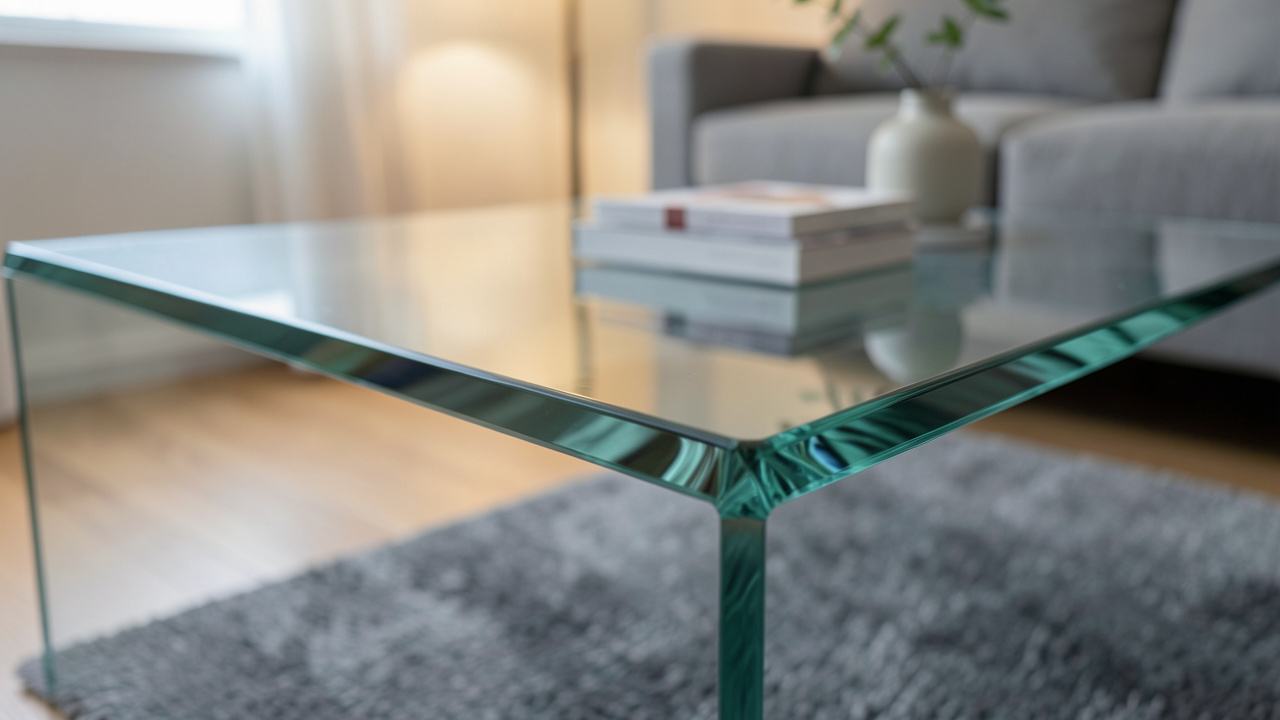
The edge style affects both the look and the safety of your glass coffee table. Sharp edges can cut skin and chip easily over time. Rounded edges are safer and more durable.
- Flat Polished Edge: A clean, modern look. Still somewhat sharp. Suitable for low-traffic areas.
- Beveled Edge: An angled edge that catches the light. Adds a decorative touch. Safer than a flat edge.
- Rounded (Radius) Edge: The safest option for families. The glass is ground into a smooth curve. This prevents cuts and reduces chipping.
- Pencil Edge: A slightly rounded edge that is similar to the radius edge but with a smaller curve. A popular middle ground.
Important: For homes with children or pets, choose a radius or beveled edge. These edges reduce the risk of injury from accidental bumps. They are also less likely to chip during cleaning or moving.
What to Look For
Check the product images closely. Look for a smooth, polished edge. If the edge looks shiny and curved in the photos, it is likely a beveled or radius edge. If it looks flat and sharp, be cautious.
4 – Base Material and Frame Quality
Overview
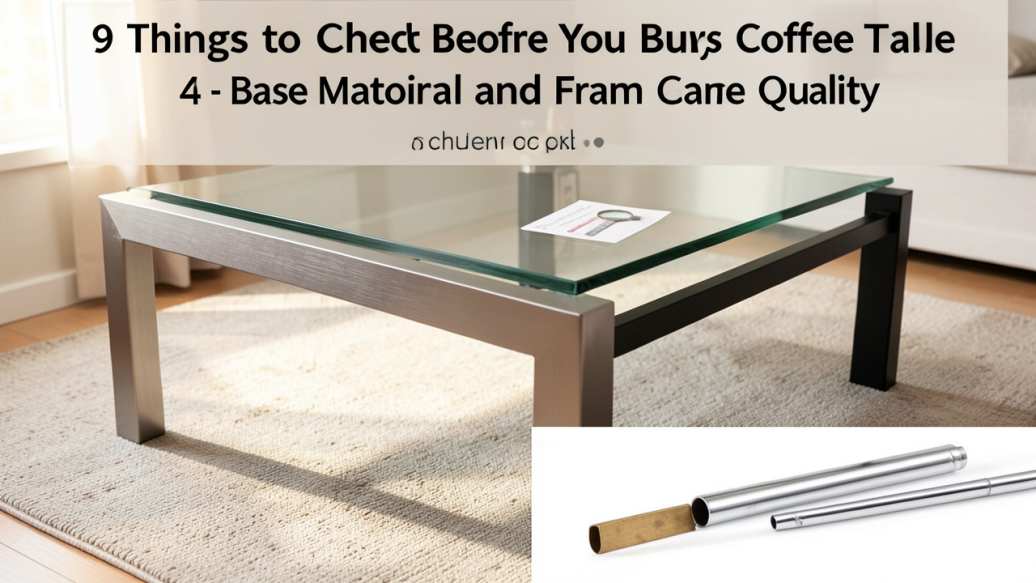
The base holds the glass top. A weak base makes the whole table unstable. The base material is just as important as the glass itself.
Common Base Materials Compared
| Material | Durability | Style | Weight |
|---|---|---|---|
| Solid Hardwood | Excellent | Traditional, Mid-Century | Heavy |
| Stainless Steel | Excellent | Industrial, Modern | Medium |
| Engineered Wood (MDF) | Fair | Modern, Budget | Medium |
| Plastic | Poor | Casual, Outdoor | Light |
What to Look For
Check the joints of the base. Are they welded, screwed, or glued? Welded metal joints and solid wood dovetail joints are strongest. Avoid bases that rely only on glue or brittle plastic brackets.
5 – Frame Connections and Hardware Quality
Overview
The way the glass attaches to the frame matters. Bad connections cause wobbling. Some tables use suction cups. Others use a metal frame that the glass sits inside.
- Full-Frame Support: The glass sits inside a complete metal or wood frame. This is the most stable design.
- Corner Brackets: The glass is held only at the corners. This looks minimal but can be less stable.
- Suction Cups: Some modern bases attach to the glass with suction cups. These can fail over time if the cups dry out.
- Clip Systems: Small metal clips hold the glass in place. These are common and reliable if made from metal, not plastic.
Warning: Check that the mounting hardware is made of metal, not plastic. Plastic clips can become brittle and break under the weight of the glass. This can cause the top to fall off.
What to Look For
Read reviews for words like “wobble” or “loose.” Look at the assembly instructions on the product page. Good hardware includes metal screws and brackets made of steel or zinc alloy.
6 – Size and Shape for Your Room
Overview
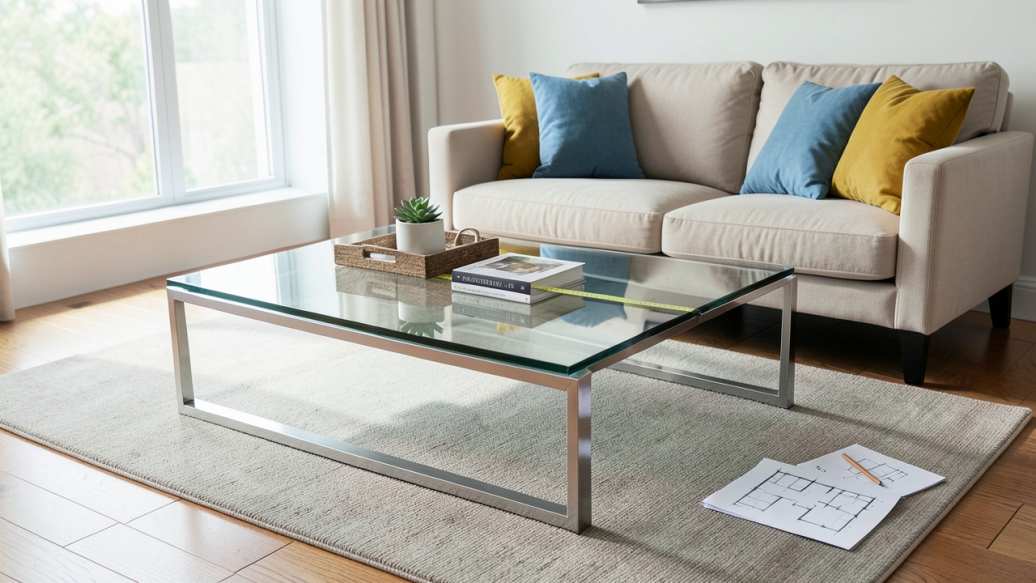
Size is one of the most overlooked things before buying a glass coffee table. A table that is too big blocks walkways. A table that is too small looks lost in the room.
How to Choose the Right Size
- Measure your sofa: The coffee table should be about two-thirds the length of your sofa.
- Check height: The top of the table should be within 2 inches of your sofa seat height.
- Leave space: Keep 14 to 18 inches between the table edge and the sofa for leg room.
- Consider shape: Rectangular tables fit best with long sofas. Round or square tables work well with sectional sofas.
What to Look For
Use painter’s tape to map out the table size on your floor. This shows you exactly how much space it will take up. Walk past the tape to see if it blocks your path.
7 – Surface Finish: Clear, Frosted, or Tinted
Overview
Glass does not just come in clear. The surface finish changes how the table looks and how much maintenance it needs. Each finish has pros and cons.
- Clear Glass: Shows the most dust and fingerprints. Makes the room feel very open and light.
- Frosted Glass: Hides dust and smudges well. Creates a soft, modern look. Can feel slightly less transparent.
- Tinted Glass (Bronze, Gray): Hides minor scratches better than clear glass. Adds a warm or cool tone to the room.
- Smoked Glass: A dark tint that hides almost all dust. Creates a dramatic, high-end look.
Tip: If you dislike cleaning glass often, choose a frosted or tinted finish. These finishes hide smudges and dust much better than clear glass. Clear glass looks stunning but requires frequent wiping.
What to Look For
Check the product images at different angles. Some finishes look very different in direct light vs. shade. Look for user-uploaded photos on Wayfair or Amazon to see the finish in real homes.
8 – Safety Features for Families
Overview
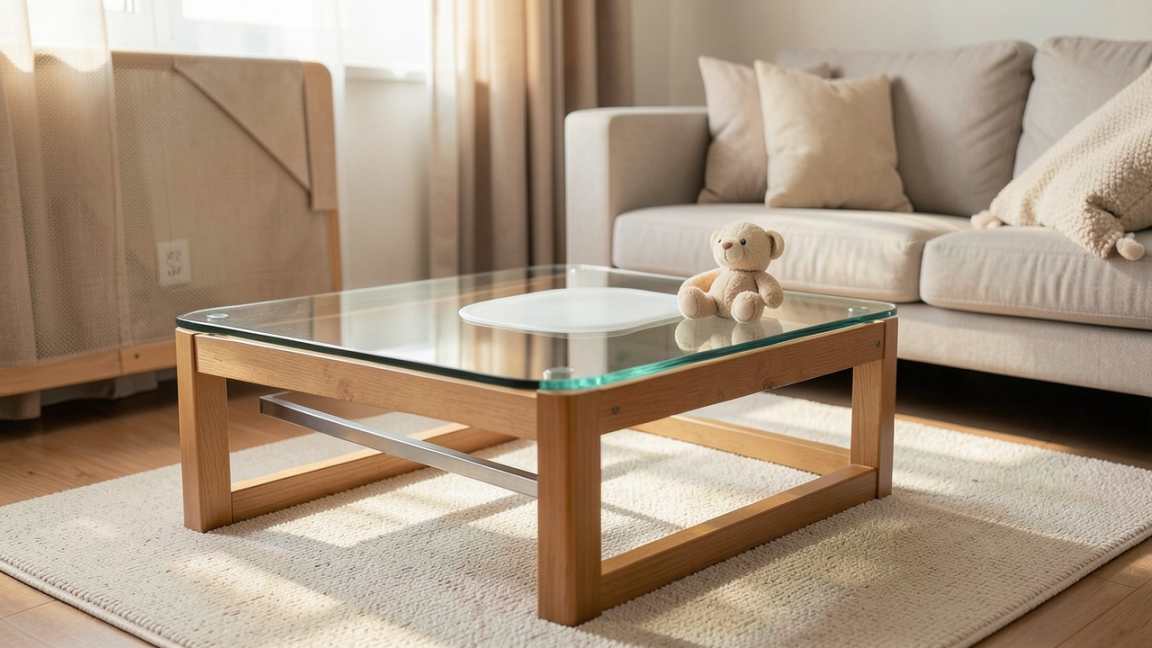
A glass coffee table can be safe for a busy household, but you need to check specific safety features. Small children and pets move fast. A sharp corner or a lightweight table can cause accidents.
Key Safety Features to Check
- Corner protectors: Some tables come with silicone corner guards. These soften sharp corners.
- Stability: Can the table tip over easily? Try to wiggle it in the store or check reviews for stability complaints.
- Non-slip pads: The glass top should have non-slip pads or gaskets where it touches the frame. This prevents the glass from sliding.
- Weight distribution: A heavy base lowers the center of gravity. This makes the table harder to knock over.
What to Look For
Look for tables that mention “anti-slip” or “stability tested.” If you have a very active household, consider a round table with a radius edge. Round shapes have no sharp corners to bump into.
9 – Assembly Difficulty and Moving the Glass
Overview
Glass coffee tables can be very heavy. A large 12mm thick glass top can weigh 50 to 70 pounds. You need to know what you are getting into before the box arrives.
What to Expect During Setup
- Two-person job: Lifting large glass tops requires two people to do it safely.
- Tools needed: Most tables come with an Allen key (hex wrench) for the frame. You may need a Phillips head screwdriver for the feet.
- Check the floor: Glass tops can scratch hardwood floors. Unbox the frame on a soft rug or blanket.
Tip: Before buying, look at the “Product Dimensions” and “Item Weight” on the site. Also, check the “Shipping Dimensions” to see if the box can fit through your door. Some large tables ship in a box that is over 60 inches long.
What to Look For
Read the “Assembly Required” section of the product page. Some sellers offer free in-home delivery and setup. This is a great option for heavy glass tables. Safavieh and other major brands often offer this service for an extra fee.
Common Myths vs Facts About Glass Coffee Tables
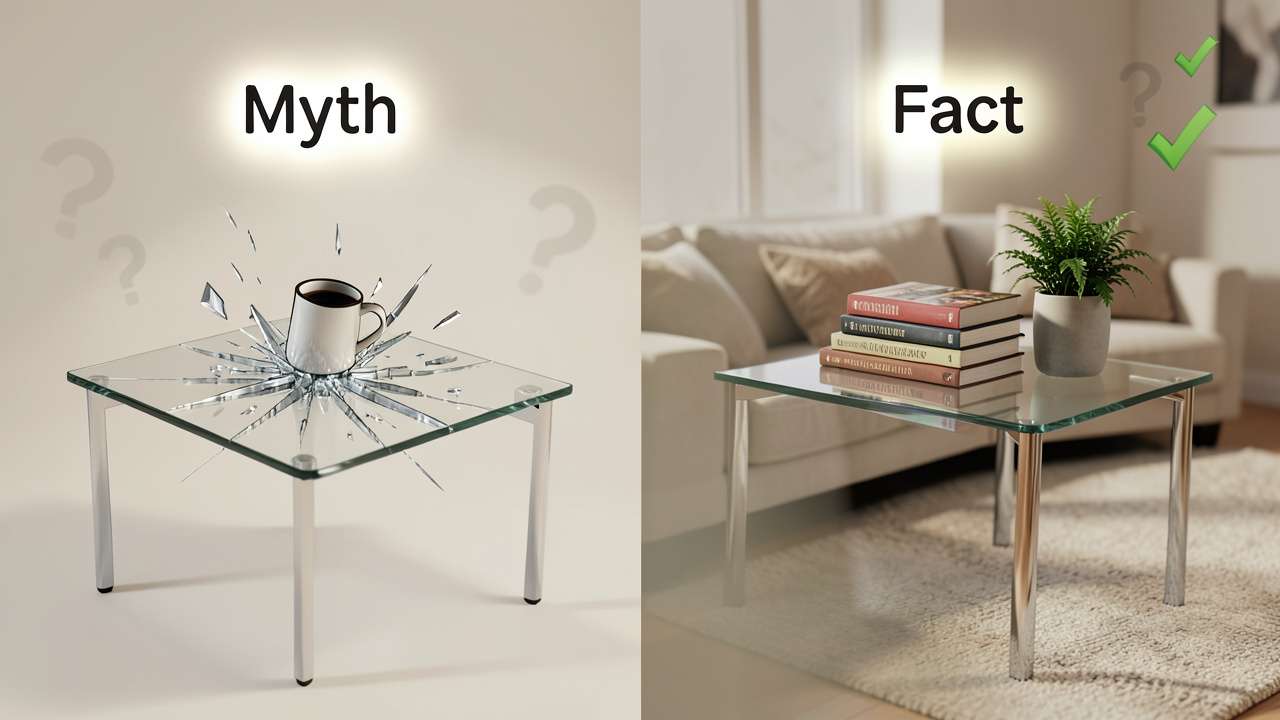
Myth 1: All glass coffee tables are fragile and break easily.
Fact: Tempered safety glass is 4 to 5 times stronger than standard glass. Thick tempered glass (8mm to 12mm) can support significant weight, including heavy coffee table books and trays. It does not break easily under normal use.
Myth 2: Glass tables are too hard to keep clean.
Fact: Glass is actually one of the easiest surfaces to clean. It does not absorb spills like wood or fabric. A simple spray of glass cleaner and a microfiber cloth makes it streak-free in under a minute. Frosted and tinted finishes hide dust even better.
Myth 3: Glass coffee tables are dangerous for homes with children.
Fact: A glass coffee table with rounded edges and a stable base is safe for families. The key is choosing tempered glass and ensuring the table cannot tip over. Many modern glass tables are designed specifically with family safety in mind.
Frequently Asked Questions
What is the best thickness for a glass coffee table?
The best thickness depends on the size of the table. For most standard tables under 48 inches, an 8mm thick glass top provides a good balance of strength and weight. For tables over 48 inches, choose a 10mm or 12mm thick top for stability.
Is tempered glass required for coffee tables?
Tempered glass is not legally required for all coffee tables, but it is highly recommended for safety. According to the, tempered glass breaks into small, harmless cubes rather than sharp shards. This makes it much safer for households.
How do I clean a glass coffee table without streaks?
Use a standard glass cleaner and a microfiber cloth. Spray the cleaner onto the cloth, not directly onto the table. Wipe in a circular motion first, then buff dry with a clean part of the cloth. Avoid using paper towels, as they can leave lint.
Are glass coffee tables safe for kids?
Yes, if you choose the right model. Look for a table with tempered glass, a rounded radius edge, and a heavy, stable base. Avoid tables with sharp corners or flimsy frames. Adding corner protectors provides extra safety for toddlers learning to walk.
What base type is most stable for a glass coffee table?
A solid wood or stainless steel base is the most stable. Full-frame support that cradles the entire glass top provides the best stability. Look for crossbars or a sturdy pedestal in the middle to prevent wobbling.
Final Thoughts
A glass coffee table adds brightness and style to any living room. Focus on tempered safety glass, a sturdy base, and the right size for your space. Checking these 9 things helps you find a table that is both beautiful and safe. Take your time to compare features before making your final decision.


